 Zapisz
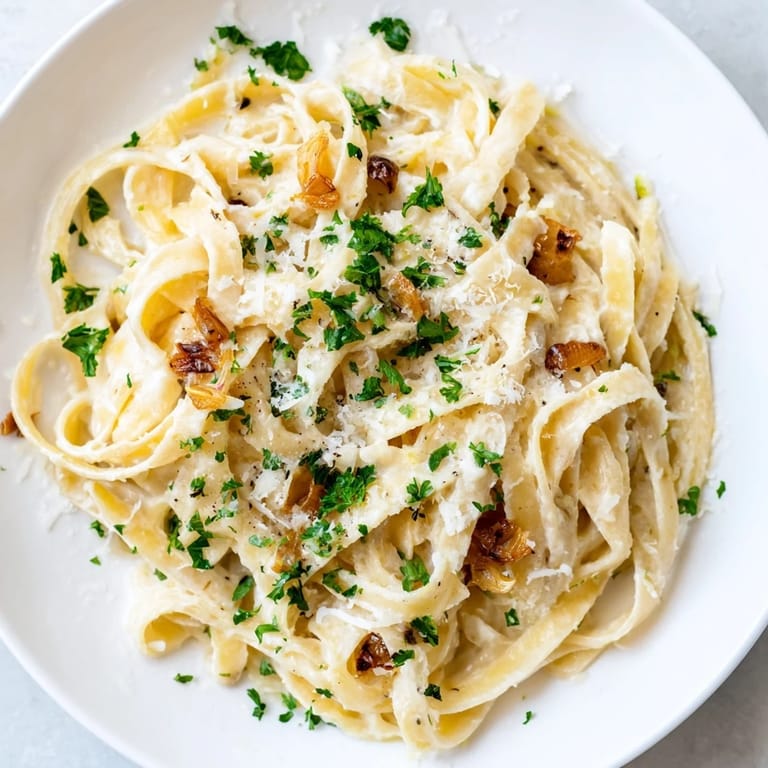
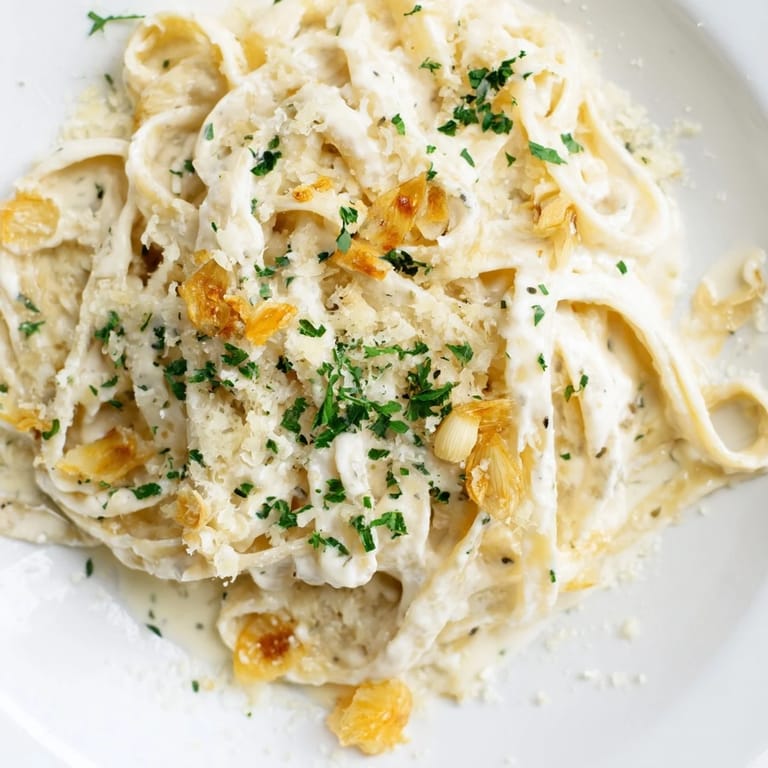
 Kilka lat temu moja przyjaciółka przywiozła ze swojej włoskiej wioski przepis na makaron ze śmietaną czosnkową, a ja beznadziejnie spaliłem czosnek w pierwszej próbie. Teraz, odkąd nauczyłem się powoli piekąc całe główki w piecu, każdy talerz staje się aktem pokuty i odkupienia. To danie zmieniło moje podejście do gotowania – nauczyło mnie, że czasem wolniej oznacza lepiej, a czosnek może być czymś łagodnym i słodkim, nie ostrym i dominującym.
I remember making this for my mom after her surgery when she couldn't handle anything with strong flavors, and watching her visibly relax as she twirled the first fork of pasta. The roasted garlic was so gentle and golden that she asked for seconds, which meant everything. That's when I realized comfort food isn't about bells and whistles—it's about how something makes you feel.
Ingredients
- 2 whole garlic bulbs: These transform during roasting from pungent to creamy and sweet, becoming the soul of your sauce—don't skip the roasting step or you'll miss the entire point.
- 2 tsp olive oil: Just enough to coat those garlic heads and help them blister gently in the oven.
- 350 g fettuccine or spaghetti: Pick a shape that catches sauce in its curves; thin strands work best here.
- Salt for pasta water: Season generously so your pasta itself is flavorful, not just the sauce.
- 2 tbsp unsalted butter: This is your flavor foundation, so use real butter that smells like butter.
- 1 small shallot, finely chopped: Shallots add a whisper of sweetness that regular onions would bulldoze past.
- 250 ml heavy cream: The luxurious base that makes this feel indulgent without being heavy.
- 60 ml milk: A trick to lighten the cream just enough so it doesn't feel like you're eating butter for dinner.
- 60 g freshly grated Parmesan cheese: Always grate it yourself—pre-grated has anti-caking agents that grit between your teeth.
- 1/4 tsp freshly ground black pepper and salt: These aren't afterthoughts; they're the sharpness that balances the roasted garlic's sweetness.
- Pinch of nutmeg: Optional but it's the secret handshake that makes people wonder what you did differently.
- Extra Parmesan and fresh parsley for garnish: The parmesan for texture, the parsley so it doesn't look pale and sad on the plate.
Tired of Takeout? 🥡
Get 10 meals you can make faster than delivery arrives. Seriously.
One email. No spam. Unsubscribe anytime.
Instructions
- Prep your garlic for its transformation:
- Slice the tops off both bulbs to expose those papery cloves inside, then drizzle with olive oil and wrap everything tightly in foil. You're basically creating a little oven for each bulb to soften into submission.
- Let the oven do the real work:
- Roast at 200°C for 35 to 40 minutes until the cloves squeeze out like butter and smell like caramelized dreams. The longer you roast, the sweeter it becomes—I learned this by burning a batch once and realizing the burnt version was actually worse, so aim for golden.
- Boil your pasta water with purpose:
- Fill a large pot with water and salt it like you're seasoning soup, not pasta—this is your only opportunity to season the noodles themselves. Cook your pasta to al dente, which means tasting it at the last minute so it still has a tiny bit of resistance.
- Build the sauce foundation:
- Melt butter in a large skillet over medium heat and let it start to smell nutty, then add chopped shallot and let it soften for about 2 minutes until it's translucent and sweet. Squeeze out your roasted garlic cloves and mash them into a creamy paste—they should almost dissolve between your fingers.
- Marry the garlic and butter:
- Stir that garlic paste into the hot butter and shallot mixture for about a minute until your kitchen smells like something from a Michelin star restaurant. Don't rush this part; let the flavors wake up.
- Create the sauce that holds everything together:
- Pour in the cream and milk together, whisking as you go to avoid any lumps, then let it simmer gently for 3 to 4 minutes until it thickens slightly and coats the back of a spoon. You're looking for a sauce that flows like silk, not soup.
- Add the cheese and seasonings:
- Stir in the Parmesan, salt, pepper, and that optional pinch of nutmeg, then let everything simmer together until the cheese fully melts and the sauce becomes velvety and golden. Taste it now and adjust the salt—you're the boss.
- Bring it all together:
- Toss the drained pasta into the sauce and coat every strand, adding that reserved pasta water one splash at a time until the sauce clings to the noodles without drowning them. The starch in the pasta water helps the sauce grip the strands.
- Plate and celebrate:
- Serve immediately while everything is still steaming hot, finishing each plate with extra Parmesan and a shower of fresh parsley if you have it. This is not a dish that waits patiently.
 Zapisz
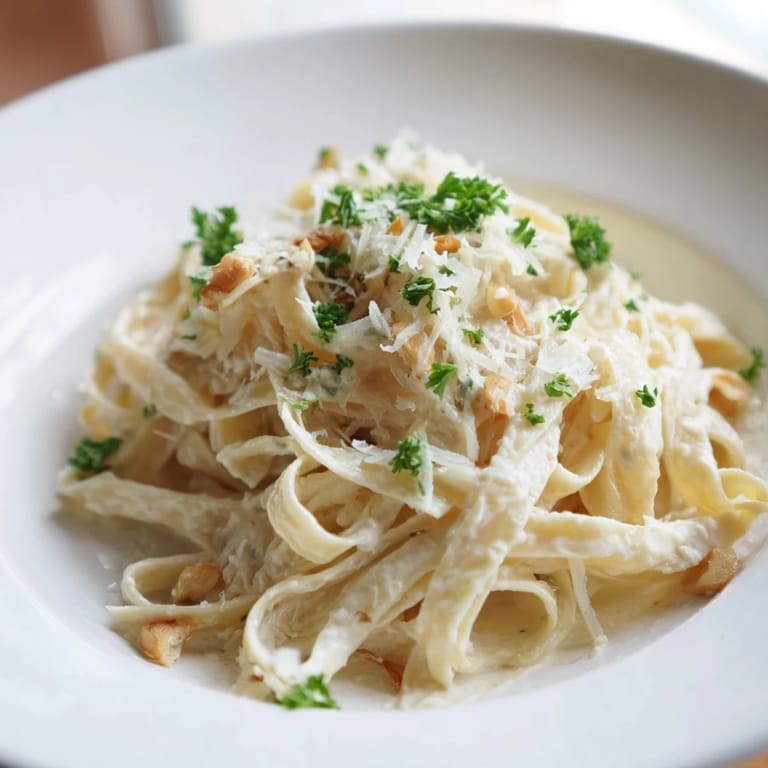
 There's a moment right as you're tossing the hot pasta into that golden cream sauce when everything comes alive—the steam rises, the Parmesan melts into ribbons, and you suddenly understand why people talk about Italian food like it's poetry. That's the moment I cook for.
Why This Dish Works So Well
The magic here is the contrast—roasted garlic brings sweetness and depth, the cream provides richness, the Parmesan adds a salty sharpness, and the milk keeps everything from becoming a heavy coating. Each element plays a role, which is why this dish tastes so balanced despite having barely five ingredients in the sauce itself. It's not flashy, but it's complete.
Variations and Additions
Once you've mastered the basic version, you can spin it different ways without losing what makes it special. I've added sautéed mushrooms during a rainy Sunday and fresh spinach when I felt virtuous, and both times the roasted garlic was still the star. You can also swap half the heavy cream for half-and-half if you want something lighter, though I think full cream is worth the indulgence here.
Pairing and Serving
Serve this with a crisp white wine like Pinot Grigio or Sauvignon Blanc that cuts through the richness without fighting the delicate roasted garlic flavor. A side salad with lemon vinaigrette is perfect for balance, though honestly this pasta is complete enough to eat on its own. I usually pour another glass of wine and call it dinner.
- Make sure your pasta is truly al dente or it'll turn to mush when tossed in the hot sauce.
- If you're cooking for guests, roast the garlic earlier in the day so you're only making the sauce at the last minute.
- Leftover garlic cloves are incredible spread on bread, so roast extra if you're being smart about it.
 Zapisz
 This pasta is the kind of dish that reminds you why cooking matters—not because it's complicated, but because it turns simple ingredients into something that makes people pause mid-bite and just smile. Make it when you need to feed someone's soul, not just their stomach.
Najczęściej zadawane pytania dotyczące przepisów
- → Jak najlepiej upiec czosnek, by był miękki i słodki?
Należy odciąć wierzch czosnku, skropić oliwą, owinąć folią aluminiową i piec w 200°C przez około 35-40 minut, aż stanie się miękki i złocisty.
- → Czym można zastąpić śmietanę, aby sos był lżejszy?
Można użyć pół na pół mleka i śmietanki lub śmietanki o niższej zawartości tłuszczu, co zachowa kremową konsystencję, ale ograniczy kalorie.
- → Jak uzyskać idealną konsystencję sosu do makaronu?
Dodawaj stopniowo wodę po gotowaniu makaronu do sosu, mieszając, aż osiągniesz gładką, aksamitną teksturę, która dobrze oblepi makaron.
- → Jak przechowywać pozostały sos z czosnkiem i śmietaną?
Przechowuj w szczelnym pojemniku w lodówce do 2 dni. Przed podaniem delikatnie podgrzej, mieszając, aby nie dopuścić do rozwarstwienia.
- → Czy można dodać inne składniki dla urozmaicenia smaku?
Tak, dodatki takie jak podsmażone grzyby lub szpinak świetnie komponują się z kremowym sosem i wzbogacają aromat.