 Zapisz
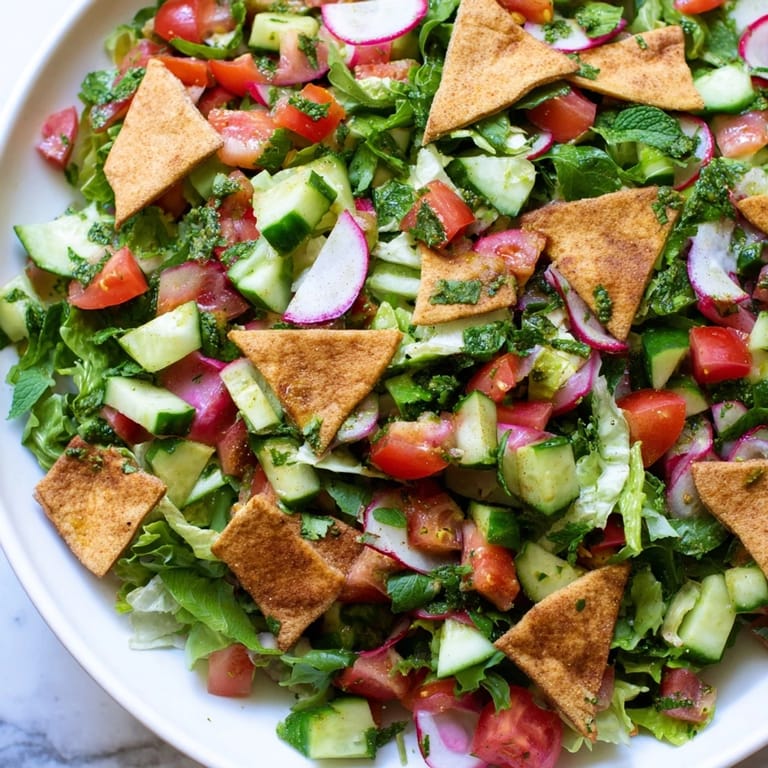
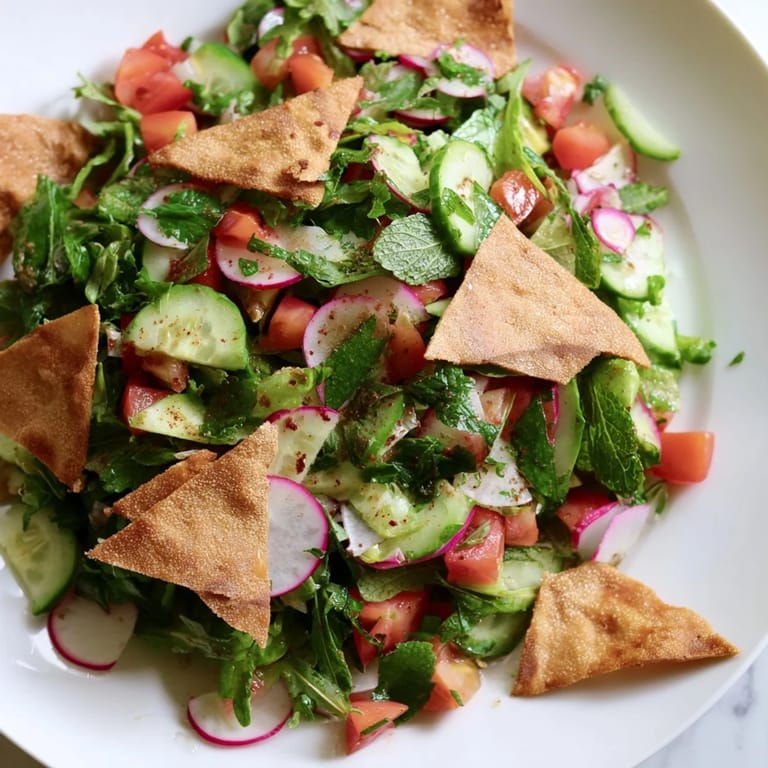
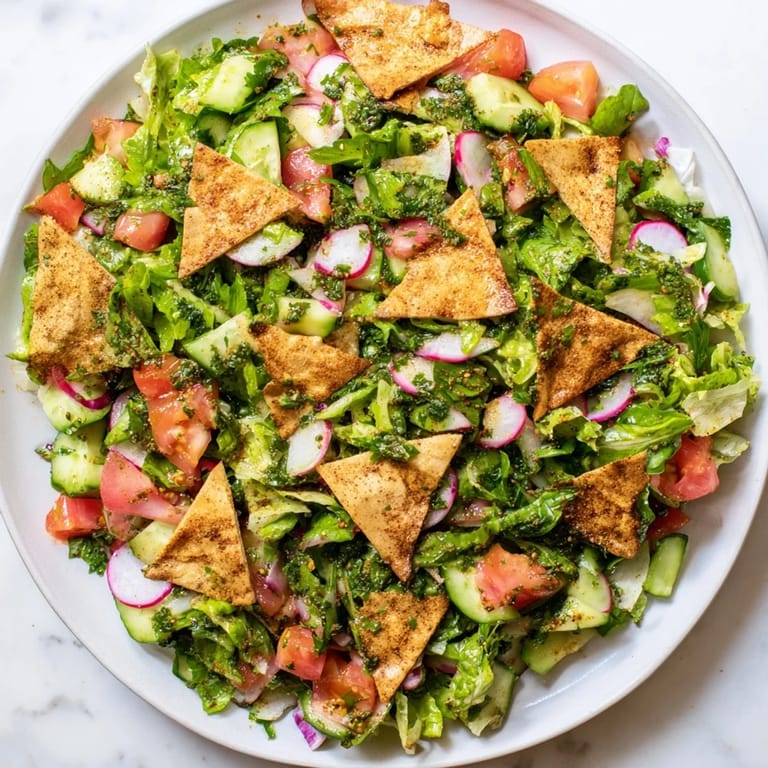
 Fattoush appeared in my kitchen on a sweltering afternoon when I was too tired to cook anything hot. A friend had mentioned this Lebanese salad in passing, and I found myself drawn to the idea of something cool, bright, and alive on a plate. I started with whatever greens I had, added tomatoes that were at their peak, and then made those pita chips as a last-minute impulse—golden, salty, shattering between my teeth. That first bite, with the tart sumac dressing coating everything, felt like I'd finally understood what a salad could be.
I made this for a small dinner party once, and someone asked if I'd bought it from a restaurant. The look on their face when I said I'd made the dressing that morning stuck with me—it was the moment I realized this salad had a quiet confidence that impressed people without trying too hard. Now it's what I make when I want to feed friends something honest and unforgettable.
Ingredients
- Mixed greens: Choose a blend that includes something peppery like arugula or peppery purslane if you can find it; the variety keeps each bite interesting instead of monotonous.
- Tomatoes: The ripest ones you can find matter here because they're the salad's backbone and there's nowhere to hide a mealy tomato.
- Cucumber: A larger one with fewer seeds works best; smaller cucumbers can turn watery and dilute the whole thing.
- Radishes: Their sharp bite is what balances the richness of the oil and the softness of the greens.
- Red onion: Thinly sliced and sometimes a quick soak in cold water mellows the bite if you prefer gentler onion flavor.
- Fresh parsley and mint: Don't skimp here; these herbs are what make it taste authentically Lebanese and not like any other salad.
- Pita bread: Look for thicker, fluffier pita that puffs up; thinner ones turn papery instead of crispy.
- Extra-virgin olive oil: A good one makes the difference in the dressing and in toasting the pita chips.
- Lemon juice and red wine vinegar: Fresh lemon is essential; bottled lemon juice tastes tinny by comparison.
- Ground sumac: This is the secret—it brings a tart, fruity note that defines the whole dish and is worth hunting for at a Middle Eastern market.
Tired of Takeout? 🥡
Get 10 meals you can make faster than delivery arrives. Seriously.
One email. No spam. Unsubscribe anytime.
Instructions
- Make the pita chips first:
- Preheat your oven to 375°F and cut the pita into bite-sized pieces; the smaller they are, the more surface area gets crispy. Toss them with olive oil and sea salt, spread them flat on a baking sheet, and bake for 8 to 10 minutes until they're golden brown and smell like toasted bread—they'll crisp up even more as they cool.
- Prepare your vegetables:
- While the chips bake, chop everything into pieces that feel right in your mouth—not too big that they're awkward to eat, not so small they fall apart. Keep the greens separate from the other vegetables if you can, so they don't get bruised before serving.
- Build the dressing:
- In a small bowl, whisk together the olive oil, lemon juice, vinegar, and sumac until it looks emulsified and slightly thickened. Add the minced garlic, salt, and pepper, and taste it on a piece of greens to make sure the balance feels right to you.
- Assemble just before eating:
- Put all your chopped vegetables and greens into a large salad bowl, then add the cooled pita chips only when you're about to serve. Pour the dressing over everything and toss gently with your hands or two spoons, being careful not to crush the chips or bruise the greens.
- Taste and serve:
- Do a final taste and adjust—maybe you need more lemon, more sumac, or more salt depending on your vegetables. Serve it immediately while the chips are still crisp and the greens are still cold.
 Zapisz
 There's something about sitting outside with this salad on a warm evening, the brightness of it matching the late sun, that makes you feel like you're taking care of yourself in the gentlest way. It's become my go-to when I want to eat something that feels both nourishing and celebratory.
The Magic of Sumac
Sumac is the ingredient that transforms this from a nice vegetable salad into something distinctly Lebanese and deeply satisfying. Its flavor is tart and slightly fruity, almost like lemon but more complex, and it doesn't overpower the fresh taste of the vegetables. Once you use it in this salad, you'll understand why it's been treasured in Middle Eastern cooking for centuries and start looking for ways to use it in other dishes.
Timing and Temperature
The contrast between the cool, crisp vegetables and the warm-then-cooled pita chips is what makes this salad feel alive. Everything should be cold or at room temperature, and the chips should still have that slight warmth and crunch that fresh-from-the-oven baking brings. If you make it too far ahead, the greens will wilt and the chips will soften, so treat assembly as part of the cooking process, not something to do hours before.
Ways to Make It Your Own
This salad has a strong backbone that holds up well to additions and variations without losing its identity. You can add diced bell pepper for sweetness, thinly sliced green onion for extra onion flavor without the sharpness, or even some crumbled feta if you want a dairy element. The beauty of fattoush is that it adapts to what's in your kitchen while still tasting authentically itself.
- A rubbed garlic clove on the warm pita before baking adds a subtle, almost perfumed note that lingers.
- If you find fresh purslane instead of regular greens, use it—its slightly lemony taste was made for this dressing.
- Serve this alongside grilled meat or as part of a mezze spread for a complete meal that feels both simple and generous.
 Zapisz
 Fattoush is proof that the best meals don't require hours of cooking or complicated techniques—just good ingredients, a moment of attention, and the willingness to eat something fresh and alive. Make it for yourself on an ordinary Tuesday, and it becomes the reason you remember that day kindly.
Najczęściej zadawane pytania dotyczące przepisów
- → Jak uzyskać chrupiące pita chips?
Pita kroimy na kawałki, dokładnie mieszamy z oliwą i solą, a następnie pieczemy w 190°C przez 8-10 minut do złotego koloru.
- → Czym jest sumak i jak wpływa na smak?
Sumak to przyprawa o lekko kwaskowatym, owocowym smaku, która nadaje sałatce charakterystyczną nutę świeżości i lekkości.
- → Jakie zioła najlepiej pasują do tej sałatki?
Świeża natka pietruszki i mięta świetnie podkreślają smak warzyw i lemoniowe nuty dressingu.
- → Czy pita można zastąpić bezglutenową alternatywą?
Tak, można użyć bezglutenowego pieczywa lub pominąć chrupiące dodatki, aby dostosować sałatkę do diety bezglutenowej.
- → Jak najlepiej podawać tę sałatkę?
Świetnie komponuje się jako samodzielne, lekkie danie lub dodatek do potraw z grilla i mezze.