 Zapisz
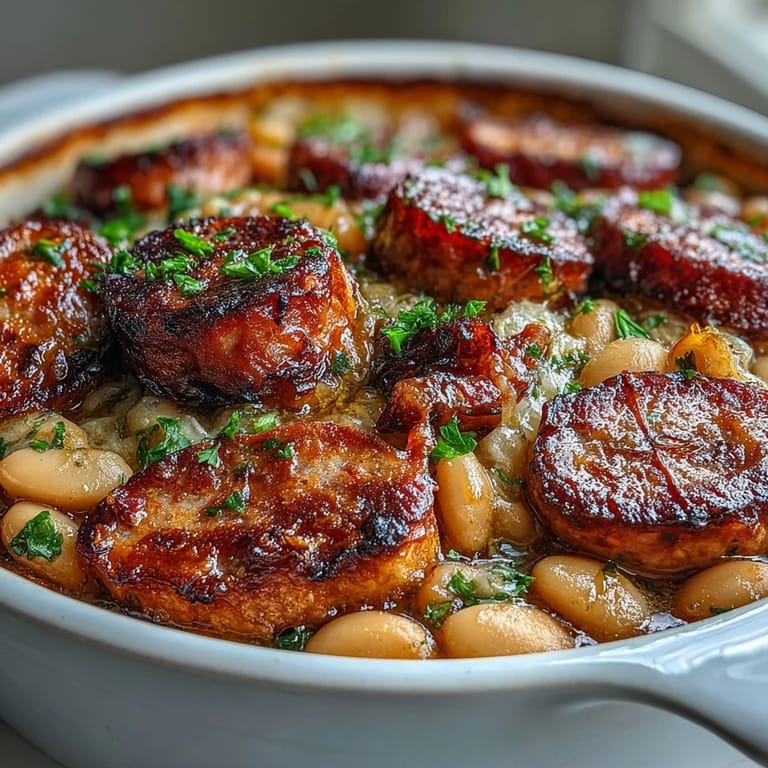
 Cassoulet arrived in my kitchen on a grey November afternoon when a French colleague mentioned how her grandmother would spend entire days tending to this dish. I was skeptical at first—how could something so humble deserve such devotion? Then I made it, and the moment those beans softened into creamy submission while the ham and sausage released their smoke into the pot, I understood. This isn't just dinner; it's the kind of meal that makes you sit longer at the table than you planned.
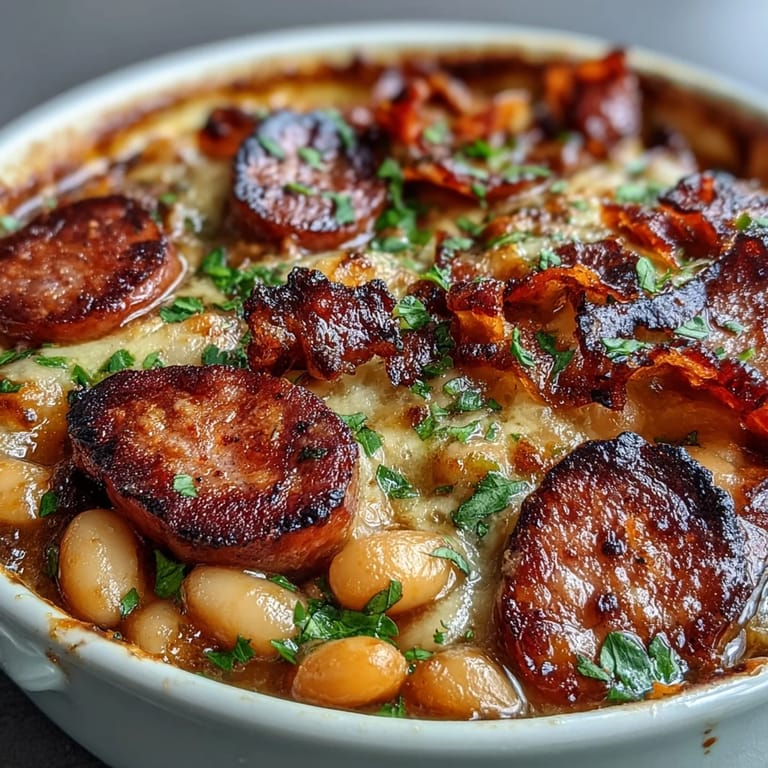
I made this for my sister's dinner party last winter, and I'll never forget how she stood in the kitchen doorway, eyes closed, just breathing in the smell coming from the oven. By the time I pulled it out with that golden, crispy breadcrumb topping, everyone had already gathered around the table before I'd even called them to sit down. That's the moment I knew this recipe was keeper—something that turns an ordinary weeknight into an occasion.
Ingredients
- Smoked ham, diced (400 g): This is your backbone of flavor; the smoke carries through the entire dish and creates that restaurant-quality depth.
- Pork sausage, thickly sliced (200 g): Don't slice it thin—thick slices keep their texture and add meaty substance that doesn't disappear into the beans.
- Bacon or pancetta, diced (100 g): The crispy rendered fat is your flavor foundation; don't skip rendering it first or you'll miss that golden note.
- Dried white beans, soaked overnight (500 g): Cannellini or Great Northern beans are your best friends here; they hold their shape and drink in the sauce without turning to mush.
- Carrots, celery, onion, and garlic: This is your aromatic base—the holy trinity plus garlic—and it's what transforms good cassoulet into something unforgettable.
- Diced tomatoes (1 can, 400 g): Drain them well so the cassoulet doesn't become watery; their acidity balances the richness of all that meat.
- Chicken stock (1.2 L): Use quality stock here; it's doing serious work carrying flavor through the entire pot.
- Tomato paste (2 tbsp): A concentrated spoonful of umami that brings everything into focus.
- Olive oil (2 tbsp): Good oil makes the sauté stage shine; don't use the cheap stuff.
- Bay leaf and fresh thyme: These create the French soul of the dish; fresh thyme is worth the effort, though dried works in a pinch.
- Smoked paprika (1 tsp): This is your secret weapon for that authentic, slightly smoky undertone without overpowering the other flavors.
- Breadcrumbs for topping (1 cup, optional): Toast them in butter if you use them; they create a crispy layer that contrasts beautifully with the soft beans underneath.
- Fresh parsley for garnish (2 tbsp): It's the final brightness that cuts through the richness and reminds your palate you're eating something fresh.
Tired of Takeout? 🥡
Get 10 meals you can make faster than delivery arrives. Seriously.
One email. No spam. Unsubscribe anytime.
Instructions
- Heat your pot and crisp the pork:
- Get your Dutch oven or heavy casserole hot with olive oil over medium heat, then add the bacon or pancetta. Listen for that gentle sizzle and watch for the color deepening to golden brown; this takes about 5 minutes and fills your kitchen with the first hint of what's coming.
- Build your flavor base with vegetables:
- Once the pork is crispy, add the chopped onion, carrots, and celery. Let them soften for 5 to 7 minutes, stirring occasionally, until the onion becomes translucent and sweet. You'll notice the whole pot starting to smell like something from a French farmhouse.
- Wake up the aromatics:
- Add your minced garlic and cook for just 1 minute more—any longer and it'll turn bitter, which nobody wants. The smell shifts here, becoming more complex and fragrant.
- Brown the meat:
- Add the diced ham and sausage slices, and let them cook until the edges brown slightly. This isn't about cooking them through; it's about building flavor through browning. Stir occasionally and let this step take about 5 minutes.
- Add the tomato magic:
- Stir in your tomato paste and smoked paprika, cooking for about 2 minutes until the paste darkens slightly. Then add your drained tomatoes and mix everything together; the color will deepen and the pot will smell increasingly incredible.
- Bring everything together:
- Add your soaked and drained beans, chicken stock, bay leaf, and thyme sprigs. Season generously with salt and pepper—taste it and adjust now because the beans will absorb flavor as they cook. Bring it to a gentle simmer.
- Let the oven do the work:
- Cover your pot and transfer it to a 160°C (325°F) oven. Bake for 1 hour 30 minutes, stirring once or twice halfway through to make sure nothing sticks to the bottom. The beans will gradually soften and the liquid will reduce into a thick, rich sauce.
- Add the crispy top (optional but recommended):
- In the final 15 minutes, sprinkle fresh breadcrumbs over the top and bake uncovered. They'll toast into a golden, crispy layer that provides textural contrast against the soft beans—this is a game changer if you take the time.
- Finish with care:
- Remove the bay leaf and thyme sprigs, taste for seasoning one more time, and adjust salt and pepper as needed. Garnish with fresh parsley just before serving to add brightness and color.
 Zapisz
 There was a moment during my second time making this when my neighbor stopped by unexpectedly, and instead of feeling flustered, I found myself inviting her to stay for dinner. She sat at my table while the cassoulet finished in the oven, and we talked about her own memories of French food and family meals. When I ladled that first bowl, watching the steam rise and smelling the complete, finished dish, I realized this recipe had become more than dinner—it was a conversation starter, a reason to gather, a way of slowing down.
Why This Dish Works
Cassoulet succeeds because it respects the ingredient list. There are no hidden tricks or unusual flavor combinations; it's just quality ingredients cooked low and slow until they become something greater than their individual parts. The white beans serve as a canvas for the smoky meats, while the tomato and herbs add brightness. Everything builds on everything else, which is why this dish actually tastes better the next day—those flavors have had time to get to know each other.
Serving and Pairing
This is a dish that demands crusty bread on the side. Slice it thick and let people wipe their bowls clean because there's no shame in savoring every bit of that sauce. A glass of robust red wine—something like Cahors or Côtes du Rhône—sits perfectly alongside it. The tannins in the wine cut through the richness of the meats, and the acidity mirrors the tomato notes in the pot.
Storage and Make-Ahead Tips
This is one of those rare dishes that genuinely improves overnight as the flavors meld and deepen. You can make it completely a day or two ahead and simply reheat it gently on the stovetop, adding a splash of water if it's gotten too thick. It also freezes beautifully for up to three months—just let it cool completely before transferring to freezer containers, and thaw overnight in the refrigerator before reheating.
- Make it in advance: Prepare cassoulet up to two days ahead; the flavors will be even more harmonious than the day you make it.
- Freeze for later: Portion it into containers and freeze for quick weeknight dinners that taste homemade and thoughtful.
- Reheat gently: Use low heat on the stovetop and add a little water if needed to prevent the bottom from sticking.
 Zapisz
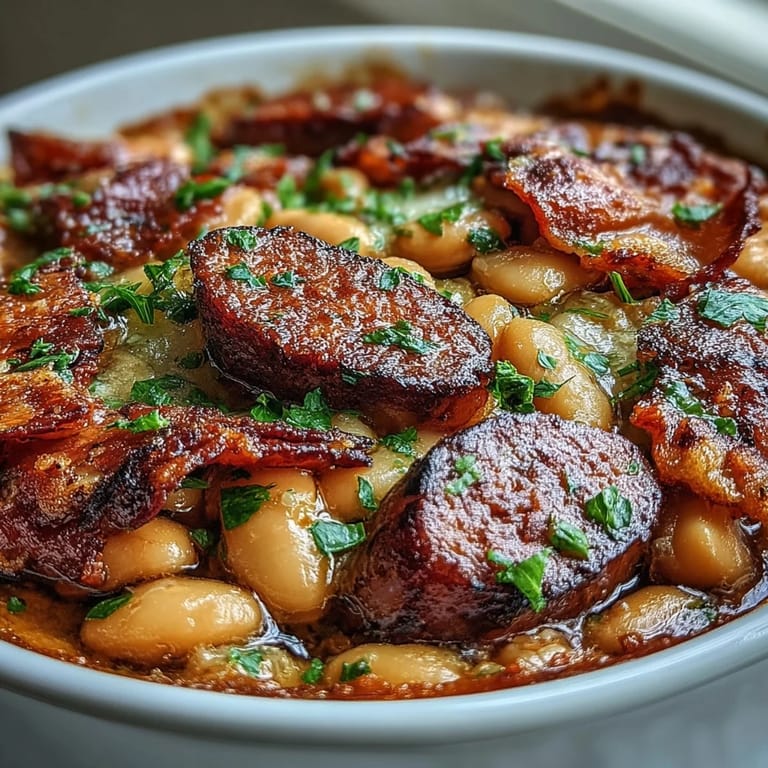
 This cassoulet represents something I've come to love about cooking: the ability to make something that feels indulgent and restaurant-quality without stress or pretense. Make it once, and you'll understand why it's been a cornerstone of French home cooking for centuries.
Najczęściej zadawane pytania dotyczące przepisów
- → Jak przygotować fasolę do dania?
Fasolę należy namoczyć przez noc w zimnej wodzie, a następnie odcedzić i przepłukać przed dodaniem do potrawy, by skrócić czas gotowania i polepszyć smak.
- → Czy można zastąpić mięsa w daniu?
Tak, dla wersji bezmięsnej pomiń wędliny i zwiększ ilość przypraw, szczególnie wędzonej papryki, aby nadać potrawie głębszy aromat.
- → Jak długo należy dusić potrawę w piekarniku?
Optymalny czas to około 1 godzina i 30 minut w 160°C, mieszając od czasu do czasu, aż fasola będzie miękka, a smaki dobrze połączone.
- → Jak uzyskać chrupiącą skórkę na wierzchu?
Na 15 ostatnich minut posyp danie świeżą bułką tartą i piecz bez przykrycia, co pozwoli uzyskać rumianą, chrupiącą skorupkę.
- → Jakie dodatki pasują do dania z fasolą i szynką?
Świetnie sprawdzi się świeże chrupiące pieczywo oraz czerwone, pełne wino, takie jak Cahors lub Côtes du Rhône, które podkreślają smak potrawy.
- → Jak przechowywać pozostałości potrawy?
Po wystudzeniu przechowuj w szczelnym pojemniku w lodówce do 2 dni. Smaki z czasem się rozwijają, warto podgrzać przed podaniem.