 Zapisz
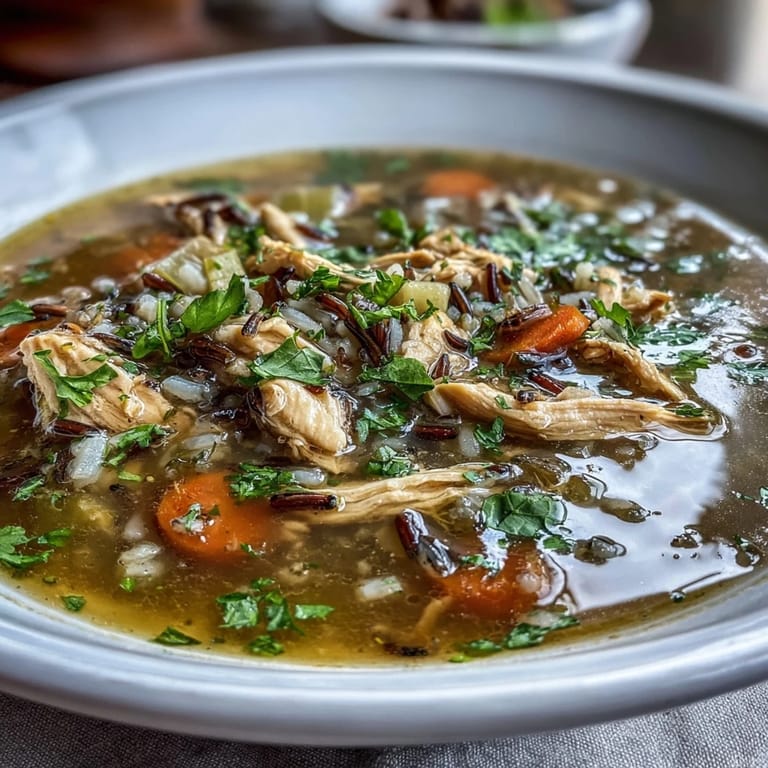
 My neighbor stopped by on a gray October afternoon with a bag of carrots from her garden, and I suddenly remembered why I loved this soup so much. There's something about wild rice that transforms a pot of broth into something almost luxurious, each grain nutty and slightly chewy against tender chicken. She stayed for a bowl, and we ended up talking until the light shifted completely, steam rising between us like we had nowhere else to be. That's when I realized this soup isn't just about feeding people—it's about giving them a reason to linger.
I made this soup once during a snowstorm when three friends got stranded at my place, and I realized I had everything in my pantry except fresh herbs. We chopped what we could find, laughed about the improvisation, and somehow it turned out even better than planned—the soup was warm, the company was loud and joyful, and nobody wanted to leave even after the roads cleared.
Ingredients
- Cooked chicken breast, 2 cups shredded or diced: Use rotisserie chicken if you're short on time, or poach chicken breasts in the broth earlier that day.
- Wild rice, 3/4 cup uncooked and rinsed: Rinsing removes dust and helps the grains cook evenly without clumping together.
- Carrots, 3 medium peeled and sliced: Cut them on a slight bias so they cook evenly and look a bit more intentional in the bowl.
- Celery stalks, 2 diced: This creates the flavor foundation with the onion and carrots—don't skip it even if you think you dislike celery.
- Yellow onion, 1 small diced: The softer onion varieties break down more gracefully into the broth than sharp white onions.
- Garlic, 2 cloves minced: Add it after the softer vegetables so it doesn't burn and turn bitter during the long simmer.
- Low-sodium chicken broth, 7 cups: Low-sodium lets you control the salt and taste the actual broth flavor, which matters more here than you'd think.
- Bay leaf, 1: This herb does quiet work in the background, bringing depth without announcing itself.
- Dried thyme and rosemary, 1 teaspoon and 1/2 teaspoon: These woody herbs are perfect for long cooking and don't fade the way fresh herbs would.
- Salt and freshly ground black pepper, to taste: Season at the very end so you're not chasing saltiness that changed as the broth reduced.
- Fresh parsley, 2 tablespoons chopped: This last-minute brightness makes people actually notice the soup tastes alive.
- Olive oil, 2 tablespoons: Regular olive oil is fine here—save the expensive stuff for drizzling finished dishes.
Tired of Takeout? 🥡
Get 10 meals you can make faster than delivery arrives. Seriously.
One email. No spam. Unsubscribe anytime.
Instructions
- Build your base:
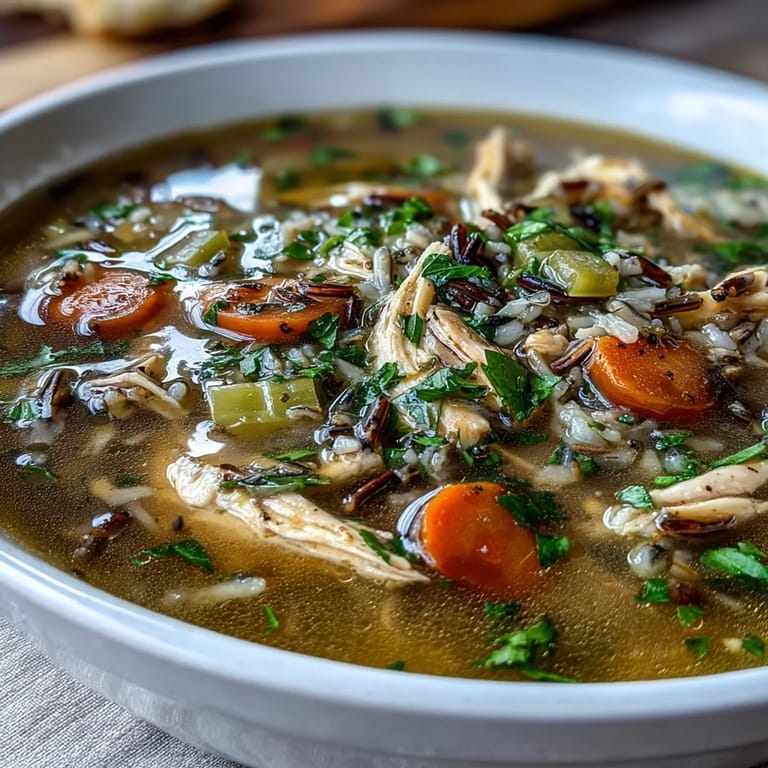
- Heat olive oil in a large pot over medium heat, then add diced onion, carrots, and celery. Listen for the sizzle, then let them soften for about five to six minutes—you're looking for the onion to turn translucent and everything to smell sweet. Don't rush this step because these vegetables are doing the real flavor work.
- Wake up the garlic:
- Stir in minced garlic and cook for just one minute until the kitchen smells noticeably more alive. Watch it carefully so it doesn't catch on the bottom of the pot and turn acrid.
- Bring in the rice and broth:
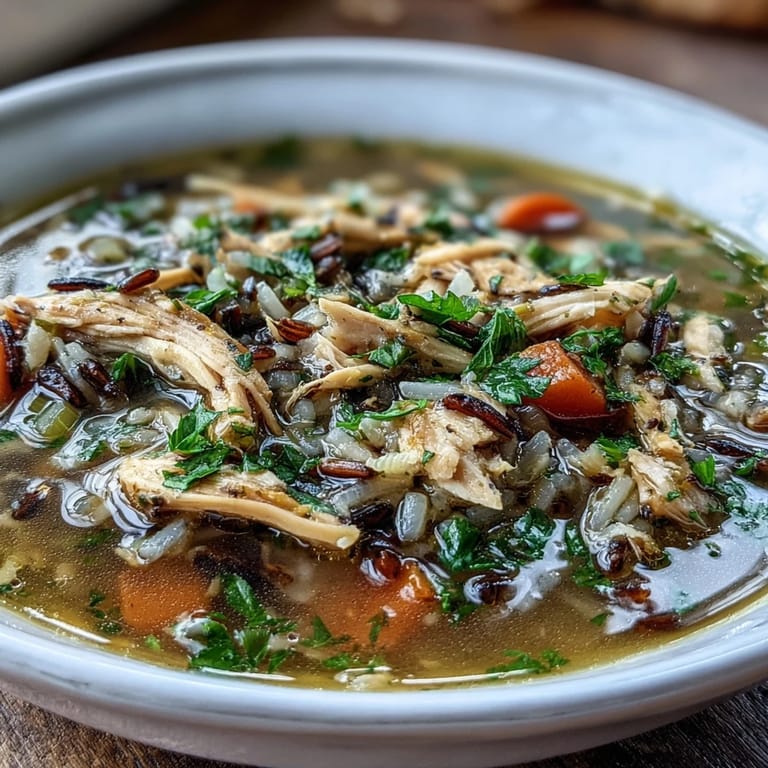
- Add the rinsed wild rice, chicken broth, bay leaf, thyme, and rosemary all at once. Bring everything to a boil—you'll see big rolling bubbles—then immediately lower the heat, cover the pot, and let it settle into a gentle simmer for forty to forty-five minutes. The rice will gradually soften and the broth will deepen in color as the grains release their starch.
- Add the chicken:
- Stir in your cooked chicken and let it warm through for five to eight minutes, just enough time for the flavors to mingle. If you're using cold chicken straight from the refrigerator, give it a few extra minutes.
- Season and finish:
- Fish out the bay leaf, then taste the soup carefully before seasoning with salt and pepper. You might be surprised how much flavor is already there, so add salt gradually.
- Serve with intention:
- Ladle the soup into bowls and scatter fresh parsley over the top—it adds color and a brightness that makes people want another spoonful.
 Zapisz
 The first time someone asked for a second bowl and actually said the words "This tastes like real food," I understood that some recipes matter less for their technique and more for what they do. This soup settled something in me about cooking—it doesn't need to be complicated or Instagram-ready to be genuinely good.
When You Want Something Creamier
On cooler evenings when the soup needs to feel more indulgent, I stir in a splash of heavy cream or whole milk right at the end, just enough to make the broth silky without erasing the clarity of flavors underneath. Some versions call for cream from the start, but I've learned that adding it at the finish keeps everything tasting fresh and bright instead of muffled. It's the difference between comfort and coziness, and both have their place.
Shortcuts That Actually Work
Rotisserie chicken from the grocery store does wonderful things for this soup, saving you the step of cooking chicken ahead of time. I've also learned that if you're truly pressed for time, brown rice cooks faster than wild rice and tastes almost as interesting—just reduce the simmering time to about twenty-five minutes and check the grains for tenderness. The soup won't taste quite the same, but it will taste genuinely good and that's what matters when you're tired.
Building a Soup Person
Making this soup taught me that consistency with one good recipe builds confidence in the kitchen in ways that chasing novelty never does. Every time I make it, I notice something new—maybe that the carrots taste sweeter when they're from a certain season, or that the soup tastes better the next day when flavors have settled and deepened. These small observations are how you become someone who cooks without thinking, who tastes something and knows exactly what to add.
- Serve with crusty bread so people have something to do with their hands while the soup cools slightly.
- A simple green salad cuts through the richness and makes the meal feel balanced without extra effort.
- Save the leftover broth base even if you finish the solids, because it freezes beautifully and gives you a head start next time you're cold.
 Zapisz
 This soup exists in that perfect place where it's easy enough to make on a Tuesday but tastes thoughtful enough for someone who matters. Keep making it, and eventually it will become the thing people ask you to bring, the comfort they think of when they think of your kitchen.
Najczęściej zadawane pytania dotyczące przepisów
- → Jak długo gotować dziki ryż?
Długi czas gotowania dzikiego ryżu wynosi około 40-45 minut, aż zmięknie i wchłonie smaki bulionu i ziół.
- → Czy można użyć innego rodzaju ryżu?
Tak, brązowy ryż może zastąpić dziki ryż, ale należy dostosować czas gotowania, aby zachować odpowiednią miękkość.
- → Jak wzbogacić smak zupy?
Dodanie świeżych ziół takich jak tymianek czy rozmaryn oraz podsmażenie warzyw na oliwie znacząco podkreśla smak i aromat.
- → Czy zupa jest odpowiednia dla bezglutenowej diety?
Tak, składniki są naturalnie bezglutenowe, jednak należy upewnić się, że bulion nie zawiera dodatków glutenowych.
- → Jak podać zupę, by była bardziej kremowa?
Na koniec można dodać odrobinę śmietanki lub pełnotłustego mleka, które wzbogaci konsystencję i smak.