 Zapisz
 Strolling through a neighborhood market on a Saturday morning, I watched a vendor expertly layer chicken, tzatziki, and fresh vegetables into warm pitas like he was composing a symphony. That moment sparked an obsession with Mediterranean gyros at home, and after countless attempts tweaking the marinade and perfecting the tzatziki ratio, I landed on this version that tastes like summer on a plate. The secret isn't complicated, but it requires patience and respect for each ingredient doing its job.
I made these for a casual dinner party during a heat wave, and watching my guests' faces light up as they bit into their first gyro made me realize sometimes the best meals are the ones that taste like a destination. There's something about building your own plate at the table that feels more generous than plated food, and everyone left asking for the recipe within minutes.
Ingredients
- Extra-virgin olive oil: This is where quality matters—cheap oil tastes thin and hollow, and you'll taste it in every bite of marinade and sauce.
- Fresh lemon juice: Bottled lemon juice tastes flat and bitter; fresh juice brings brightness that makes the whole dish sing.
- Garlic cloves: Minced by hand rather than through a press gives you control over texture and prevents overly aggressive flavor.
- Dried oregano: This is the backbone of Mediterranean flavor, and it blooms in the warm oil marinade like a waking garden.
- Dried thyme: A quieter herb that adds earthiness without demanding attention, balancing the oregano's boldness.
- Sweet paprika: Choose Hungarian or Spanish varieties for genuine flavor—the color is a bonus, but the taste is the real gift.
- Ground cumin: Just a whisper of it adds warmth and depth that keeps people guessing what makes this different.
- Cayenne pepper: Optional, but if you want a gentle heat that builds rather than shouts, this is your friend.
- Kosher salt: Coarser grains mean you can feel and control how much seasoning you're adding, unlike fine table salt.
- Chicken thighs: Dark meat with natural fat stays tender and forgiving under high heat, unlike lean breasts that dry out in seconds.
- Full-fat Greek yogurt: The richness creates that creamy tzatziki base; low-fat versions turn watery and sad under the weight of cucumber.
- Feta cheese: Crumbled feta adds tangy saltiness that plays beautifully against cool yogurt and warm chicken.
- Cucumber: Grated and squeezed removes moisture that would turn tzatziki into soup, keeping it thick and spreadable.
- Fresh dill: Dill and tzatziki are practically synonymous; that herbal freshness is non-negotiable.
- Pita breads: Fresh or quality frozen pitas make a difference—thin and flexible beats thick and cardboard-like.
- Kalamata olives: Their briny, slightly fruity punch adds complexity that transforms the gyro from good to memorable.
Tired of Takeout? 🥡
Get 10 meals you can make faster than delivery arrives. Seriously.
One email. No spam. Unsubscribe anytime.
Instructions
- Build the marinade foundation:
- Whisk together olive oil, lemon juice, minced garlic, oregano, thyme, paprika, cumin, cayenne if using, salt, and pepper in a large bowl until the spices are evenly distributed and smell absolutely intoxicating. This is your moment to taste the raw marinade on your finger—it should be bold and lemony, almost aggressively so, because it mellows once it coats the chicken.
- Marry chicken with flavor:
- Toss sliced chicken into the marinade, making sure every piece gets a thorough coating, then cover and refrigerate for at least 30 minutes or, better yet, overnight if you have patience. The longer it sits, the deeper the flavors penetrate, but even 30 minutes makes a visible and delicious difference.
- Prepare the tzatziki base:
- While chicken marinates, wrap grated cucumber in a clean kitchen towel and squeeze with real force—you're removing the water that would ruin your sauce, and you'll be amazed how much liquid comes out. Don't be gentle about it; this is where precision prevents a watery disappointment.
- Assemble creamy tzatziki:
- Combine drained cucumber, Greek yogurt, crumbled feta, minced garlic, lemon juice, olive oil, and fresh dill in a medium bowl, stirring until everything melds into something smooth and creamy. Taste and adjust seasoning carefully—feta is already salty, so go easy on additional salt at first.
- Heat the pan properly:
- Set a large skillet or grill pan over medium-high heat and let it get hot enough that a drop of water sizzles immediately, then add a light drizzle of olive oil if it's not nonstick. You want that sizzle when chicken hits the pan, not a timid fizzle.
- Sear chicken until charred:
- Remove chicken from marinade, shaking off excess, then cook in a single layer for 5 to 7 minutes per side until cooked through with lightly charred edges that taste deeply savory. Resist the urge to move it around constantly; let it sit and build that crust.
- Let chicken rest and reset:
- Transfer cooked chicken to a cutting board and let it rest undisturbed for 5 minutes, which allows juices to redistribute so each bite stays tender. Then slice into thin strips against the grain for maximum tenderness.
- Warm the pitas gently:
- While chicken rests, heat pita breads in a dry skillet for 2 to 3 minutes or wrap them in foil and warm in a low oven, making them pliable and warm but not crispy. A warm pita is a game-changer compared to cold, stiff bread.
- Assemble with intention:
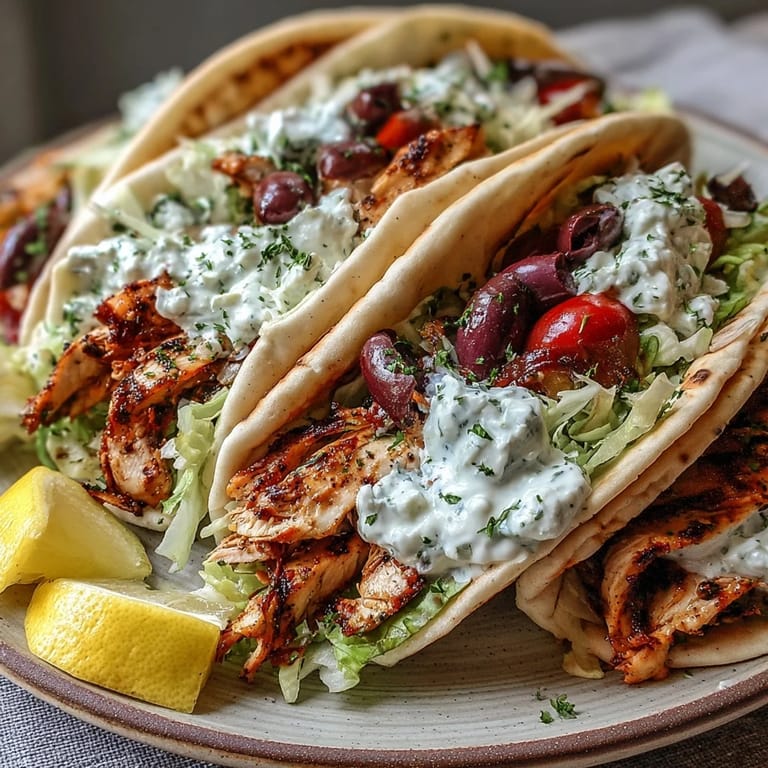
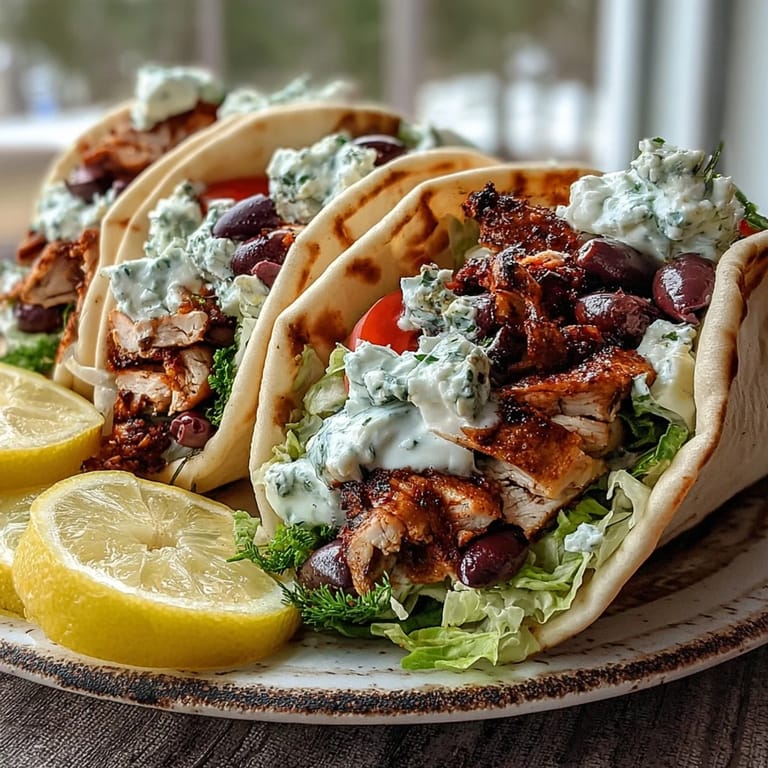
- On each warmed pita, spread a generous spoonful of creamy feta tzatziki down the center, then layer shredded lettuce, diced tomatoes, red onion slices, and Kalamata olives on top. Arrange chicken slices over everything, drizzle with additional tzatziki, and crown with fresh parsley or mint.
- Finish and serve immediately:
- Serve gyros right away with lemon wedges alongside so each person can squeeze bright citrus over their plate. The moment between plating and eating is everything; don't let it linger.
 Zapisz
 There's a moment late on a weeknight when my partner came home, smelled the chicken sizzling and oregano hanging in the kitchen air, and just stopped and smiled without saying anything. That silence said more than words ever could—this dish has that effect, turning an ordinary Tuesday into something worth remembering.
Why This Works So Well
Mediterranean flavors work because they've been refined over centuries of cooking with what the sun and soil provide, and there's wisdom in that simplicity. The combination of olive oil, lemon, garlic, and oregano isn't trendy or complicated; it's proof that restraint and respect for ingredients beats elaborate technique every single time. Each component supports the others rather than competing for attention, which is why this dish feels both nourishing and exciting.
Making It Your Own
The beauty of gyros is their flexibility, and once you nail the base, you can pivot based on what's in season or what you're craving. I've swapped chicken for thinly sliced lamb, which deepens everything and feels more luxurious for special occasions, or even grilled vegetables for vegetarian guests. Some nights I add a drizzle of hot sauce or harissa to the tzatziki if I'm feeling spicy, and the whole dish adapts without losing its identity.
Serving and Storage Wisdom
These gyros are best eaten immediately while the chicken is still warm and the pita is soft, but life isn't always that neat. Any leftover tzatziki becomes your secret weapon—it's exceptional as a dip for roasted vegetables, a sandwich spread, or even dolloped onto grilled fish the next evening. Store it separately from the assembled gyros, and you'll have a versatile sauce that keeps for up to three days, making it worth doubling the batch just for future meals.
- Assemble gyros only when you're ready to eat them so the pita stays warm and bread doesn't absorb too much sauce and become soggy.
- Leftover cooked chicken can be shredded and tossed into salads, grain bowls, or wrapped in additional pitas for quick next-day meals.
- Make the tzatziki up to a day ahead so flavors have time to meld and the sauce becomes even more cohesive and delicious.
 Zapisz
 This recipe reminds me that the best meals are often the ones built around simple, quality ingredients treated with care and attention. Every time I make these gyros, I'm cooking with intention rather than habit, and that mindfulness is what transforms dinner into something worth gathering around.
Najczęściej zadawane pytania dotyczące przepisów
- → Jak długo marynować kurczaka?
Minimum 30 minut, ale dla najlepszych rezultatów zaleca się marynowanie przez co najmniej 2 godziny lub całą noc w lodówce. Dłuższa marynata pozwala mięsu nasiąknąć aromatami czosnku, cytryny i ziół.
- → Czy mogę użyć piersi zamiast ud kurczaka?
Tak, piersi kurczaka również sprawdzą się doskonale. Pamiętaj jednak, aby kroić je na cienkie plasterki i uważnie monitorować czas smażenia, ponieważ piersi wysychają szybciej niż udka.
- → Jak zapobiec rozwodnieniu tzatziki?
Kluczem jest dokładne odsączenie ogórka. Po starciu umieść go w czystej ściereczce kuchennej lub gaziku i mocno wyciśnij, aby usunąć jak najwięcej wody. To zapewni gęsty, kremowy sos.
- → Czym zastąpić pitę w przypadku nietolerancji glutenu?
Możesz użyć bezglutenowych placków, tortilli kukurydzianych lub podać zawartość gyrosów na talerzu jako miskę z sałatką. Wszystkie składniki świetnie komponują się również bez pieczywa.
- → Jak długo można przechowywać tzatziki?
Przygotowany sos tzatziki można przechowywać w szczelnie zamkniętym pojemniku w lodówce przez 3-4 dni. Doskonale sprawdzi się jako dip do warzyw lub dodatek do innych dań.
- → Jakie wino pasuje do tego dania?
Świetnie komponuje się z suchym białym winem greckim, takim jak Assyrtiko lub lekkim różowym z regionu śródziemnomorskiego. Chłodne piwo typu lager również będzie doskonałym wyborem.