 Zapisz
 Birria ramen caught me completely off guard at a pop-up in a converted warehouse last winter. I watched the cook ladle steaming broth over noodles with a casual confidence that made it look effortless, but the first spoonful told me there was real skill hiding under that bold, unexpected fusion. Months later, I found myself in my kitchen on a quiet Sunday, determined to reverse-engineer that moment, mixing the deep, complex spice of Mexican birria with the comfort of ramen in a way that felt both strange and inevitable. When my partner walked in and asked what that incredible smell was, I knew I'd cracked something worth keeping.
I made this for friends who thought I'd lost my mind mixing Mexican and Japanese techniques, but by the second bowl, no one was asking questions. There's something about watching people slow down and really taste their food, adding lime and cilantro and sesame seeds until it becomes exactly what they need. That meal became the kind you reference months later—the one where everyone stayed longer than they meant to, trading sips of wine and laughing about flavor combinations that shouldn't work but somehow do.
Ingredients
- Beef chuck roast: Two pounds sounds like a lot, but it shrinks as it cooks down—save the chunky cuts because they have the collagen that makes this broth silky.
- Dried guajillo and ancho chilies: Don't skip toasting them first; that quick heat transforms them from papery to fragrant, and your kitchen will smell like real Mexican cooking.
- Chipotle in adobo: Just one, but it's the secret voice in the background—smoky, a little spicy, making everything taste deeper than it should.
- Apple cider vinegar: This is your acid anchor, cutting through the richness so the broth never feels heavy.
- Spices (cumin, cinnamon, cloves): Yes, cinnamon in beef broth sounds odd until you taste it—warm and rounded, not sweet.
- Ramen noodles: Use fresh if you can find them, but instant works fine; just throw out those flavor packets.
- Soft-boiled eggs, scallions, bean sprouts, cilantro: These are your chaos agents—each person builds their own moment, and that matters.
Tired of Takeout? 🥡
Get 10 meals you can make faster than delivery arrives. Seriously.
One email. No spam. Unsubscribe anytime.
Instructions
- Toast and soak the chilies:
- Set a dry skillet over medium heat and move those guajillo and ancho chilies around for a minute or two until they smell alive and almost smoky. Drop them in a bowl of hot water and let them soften for 10 minutes—this is when you can prep everything else without rushing.
- Blend the soul of the dish:
- A good blender turns those soft chilies, chipotle, onion, garlic, tomatoes, and spices into something smooth and complex that smells like it took hours to build. Don't skip blending—this is the flavor foundation, and it needs to be silky.
- Brown the beef properly:
- Work in batches if you need to; the meat needs contact with the hot pan to develop color and crust, not steam. This takes patience but changes everything about the final broth.
- Build the broth and let time do the work:
- Stir the chile blend and beef broth into the pot with the browned meat, add bay leaves, cover, and let it simmer low and gentle for two and a half to three hours. The kitchen will fill with an aroma that makes you forget it's still the middle of the afternoon.
- Shred and clarify:
- When the beef falls apart at the touch of a fork, you're there. Pull it out, shred it with two forks, and skim the fat from the broth surface—this is tidying up, not removing flavor.
- Create the ramen broth fusion:
- Strain your birria broth into a fresh pot, add the chicken broth, soy sauce, and sesame oil, and let it warm through. This is where the two cuisines finally meet and start talking to each other.
- Cook noodles and build bowls:
- Cook your ramen until just tender, divide it among bowls, and ladle that hot broth over it generously. The noodles will soften just a bit more from the heat.
- Top with abundance and intention:
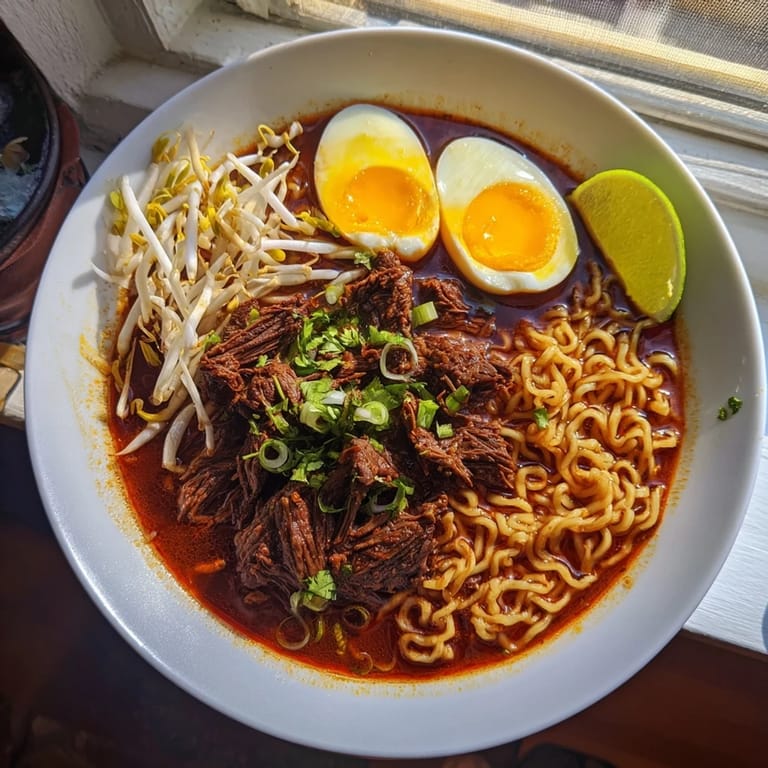
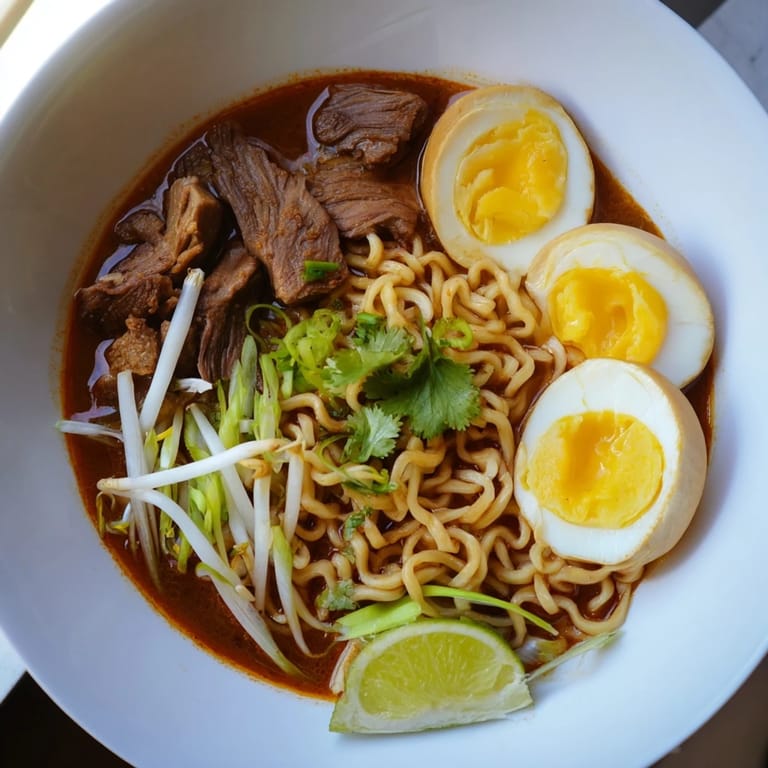
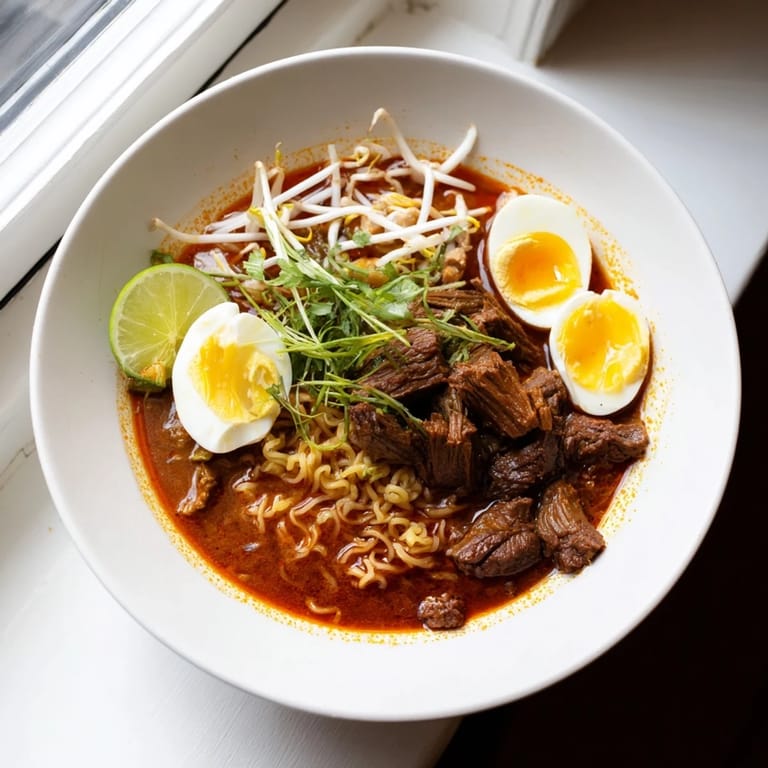
- Shredded beef, halved soft-boiled eggs, fresh scallions, bean sprouts, cilantro, lime, whatever optional toppings you're drawn to—each one adds its own voice to the bowl.
 Zapisz
 The moment this became real for me was when someone who claimed they "don't really like fusion food" asked for seconds and wanted the recipe. Food that makes people reconsider their opinions is worth learning how to make.
The Spice Architecture
The genius of this dish is that the spices don't compete—they layer. The cumin adds earthiness, the cinnamon brings warmth and subtle sweetness, and the cloves slip in at the end like a quiet reminder of something you can't quite name. I learned this by taste, not by following rules, and now when I make this, I let each spice announce itself before moving to the next. The apple cider vinegar is your safety net, keeping everything bright so the broth never collapses into heaviness.
Make It Yours
This recipe came to me as a challenge to blend two cuisines that shouldn't work together, but that's exactly why it does. Once you've made it once, you'll start seeing variations—swap the beef for chicken for something lighter, add a splash of coffee to deepen the broth, throw in radishes or corn because your hands reached for them in the market. The structure stays the same, but the personality becomes yours.
The Final Assembly
There's something ceremonial about filling a bowl with all these pieces and letting each person customize it at the table. No two bowls end up the same, and somehow that's exactly the point. The ramen is the base, the broth is the embrace, and the toppings are the conversation.
- Soft-boiled eggs should be jammy in the middle—time them carefully and shock them in ice water the moment they're done.
- Fresh cilantro and lime are non-negotiable; they're the brightness that makes every spoonful feel alive.
- If you want extra richness, crisp some of the shredded beef in a hot skillet before serving and watch how it transforms.
 Zapisz
 This dish lives at the intersection of two food traditions that discovered they had more in common than either expected. Serve it warm, serve it loud, and let people make it their own.
Najczęściej zadawane pytania dotyczące przepisów
- → Jak przygotować mięso birria, by było miękkie?
Wołowinę należy długo dusić na niskim ogniu z przyprawami i bulionem, aż będzie łatwo się rozdzielać na włókna.
- → Jakie rodzaje papryki są używane w marynacie?
Wykorzystujemy suszone papryki guajillo, ancho oraz chipotle w adobo, które dodają wyrazistego smaku i umiarkowanej ostrości.
- → Czy można używać świeżego makaronu ramen zamiast instant?
Tak, świeży makaron ramen nada potrawie lepszą teksturę i bardziej autentyczny charakter.
- → Jakie dodatki najlepiej komponują się z daniem?
Dodatki takie jak jajka na półtwardo, świeża kolendra, szczypiorek, kiełki fasoli i limonka podkreślają smak i dają świeżość.
- → Czy bulion birria-ramen można przygotować wcześniej?
Tak, bulion można przygotować dzień wcześniej i przechowywać w lodówce, co pozwoli intensyfikować smaki.