 Zapisz
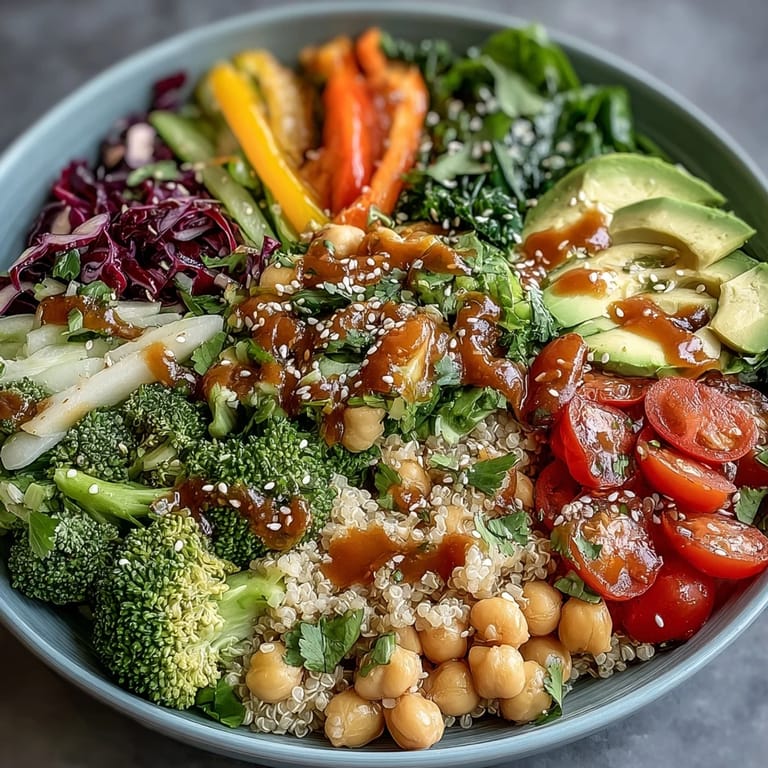
 Welcome to a world of vibrant flavors and nourishing ingredients! Our Rainbow Veggie Buddha Bowl with Sesame Ginger Dressing is a feast for both the eyes and the palate. Inspired by the traditional Buddha bowl concept of balance and harmony, this colorful creation brings together a medley of fresh vegetables, hearty grains, and plant-based protein, all tied together with a zesty Asian-inspired dressing that will tantalize your taste buds.
Zapisz The beauty of this Buddha bowl lies in its perfect harmony of flavors, textures, and nutrients. Each component plays an important role - from the nutty brown rice base to the rainbow of vegetables providing different vitamins and minerals. The chickpeas add a satisfying protein boost, while the sesame ginger dressing ties everything together with its perfect balance of salty, sweet, tangy and aromatic notes.
- Grains: 1 cup (180 g) brown rice or quinoa, uncooked and 2 cups (480 ml) water
- Fresh Vegetables: 1 cup (150 g) cherry tomatoes, halved, 1 cup (120 g) shredded red cabbage, 1 cup (120 g) shredded carrots, 1 yellow bell pepper, thinly sliced, 1 cup (80 g) broccoli florets, lightly steamed or raw, and 1 avocado, sliced
- Protein: 1 cup (170 g) cooked chickpeas (canned, drained and rinsed)
- Toppings: 2 tbsp (15 g) sesame seeds, 2 tbsp (4 g) chopped fresh cilantro or parsley, and 2 green onions, sliced
- Sesame Ginger Dressing: 3 tbsp (45 ml) toasted sesame oil, 3 tbsp (45 ml) tamari or soy sauce (use tamari for gluten-free), 2 tbsp (30 ml) rice vinegar, 1 tbsp (15 ml) maple syrup or honey, 1 tbsp (15 ml) freshly grated ginger, 1 clove garlic, minced, and juice of 1 lime
Tired of Takeout? 🥡
Get 10 meals you can make faster than delivery arrives. Seriously.
One email. No spam. Unsubscribe anytime.
- Step 1:
- Cook the brown rice or quinoa: Rinse grains, add to a pot with water, bring to a boil, then simmer covered for 15–20 minutes until tender. Fluff with a fork and set aside.
- Step 2:
- Prepare the vegetables: While the grains cook, wash and chop all vegetables as directed.
- Step 3:
- Make the sesame ginger dressing: In a small bowl, whisk together sesame oil, tamari or soy sauce, rice vinegar, maple syrup, ginger, garlic, and lime juice until well combined.
- Step 4:
- Lightly steam broccoli florets if desired, or leave raw for extra crunch.
- Step 5:
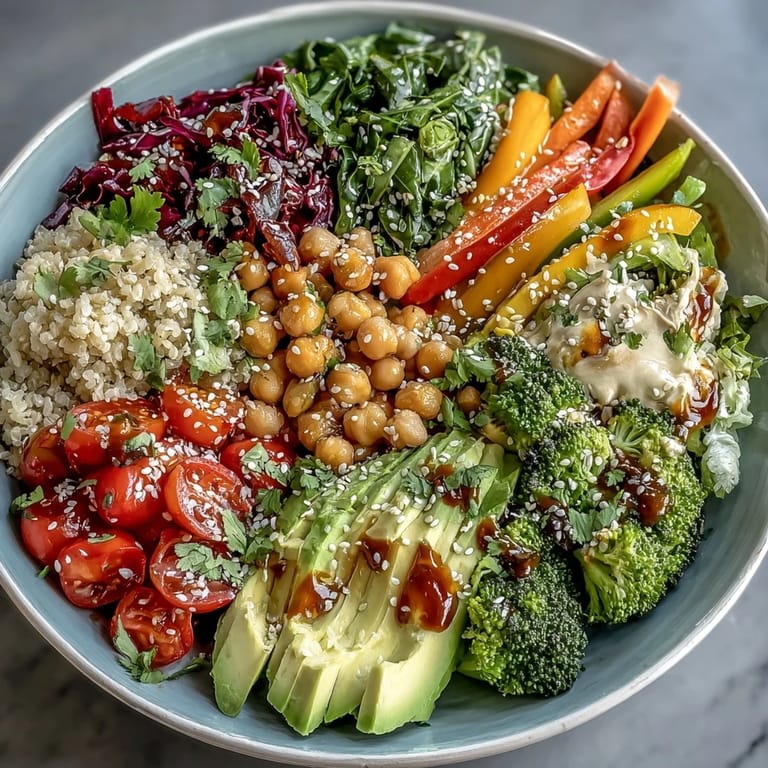
- Assemble the bowls: Divide cooked grains among four bowls. Arrange cherry tomatoes, cabbage, carrots, bell pepper, broccoli, avocado, and chickpeas on top in sections for a rainbow effect.
- Step 6:
- Drizzle bowls generously with sesame ginger dressing.
- Step 7:
- Garnish with sesame seeds, fresh cilantro or parsley, and green onions. Serve immediately.
Die perfekte Buddha Bowl braucht etwas Vorbereitung, aber mit diesen Tipps wird's einfacher: Bereiten Sie das Getreide und die Dressing am Vortag vor, um Zeit zu sparen. Schneiden Sie alle Gemüse auf ähnliche Größe für eine ausgewogene Textur. Achten Sie auf die Farbkombination - je bunter, desto ansprechender. Und vergessen Sie nicht, die Kichererbsen gut abzuspülen, um überschüssiges Natrium zu entfernen.
Diese Buddha Bowl lässt sich wunderbar an persönliche Vorlieben anpassen: Ersetzen Sie braunes Reis durch Quinoa für mehr Protein oder durch Blumenkohl-Reis für eine kohlenhydratarme Option. Verwenden Sie Edamame oder Tofu statt Kichererbsen für eine andere Proteinquelle. Fügen Sie Kimchi oder Sauerkraut hinzu für probiotische Vorteile. Spielen Sie mit saisonalen Gemüsesorten und probieren Sie verschiedene Kräuter wie Minze oder Thai-Basilikum aus.
Servieren Sie Ihre Buddha Bowl frisch zubereitet, mit der Dressing separat, damit jeder seine eigene Menge hinzufügen kann. Eine kleine Schale mit zusätzlichen Sesamsamen und frischen Kräutern zum Nachgarnieren macht die Präsentation noch ansprechender. Die Bowl passt perfekt zu einem leichten Miso-Suppe als Vorspeise oder einem fruchtigen Dessert als Abschluss. Für ein Getränk eignet sich grüner Tee, Kombucha oder ein Glas gekühlter Sauvignon Blanc hervorragend.
 Zapisz
 Every bite of this Rainbow Veggie Buddha Bowl offers a perfect harmony of flavors and nutrients. The combination of hearty grains, plant-based protein, and colorful vegetables creates a balanced meal that's as good for your body as it is delightful to your senses. The zingy sesame ginger dressing ties everything together, infusing each component with its aromatic essence. Whether you're a seasoned plant-based eater or simply looking to add more vegetables to your diet, this vibrant bowl is sure to become a favorite in your meal rotation!
Najczęściej zadawane pytania dotyczące przepisów
- → Jak przygotować idealnie ugotowane zboża?
Ziarna należy przepłukać pod zimną wodą, następnie gotować pod przykryciem w odpowiedniej ilości wody przez 15-20 minut, aż będą miękkie. Po ugotowaniu warto je wymieszać widelcem, aby były sypkie.
- → Czy brokuły można serwować na surowo?
Brokuły mogą być lekko blanszowane lub użyte na surowo, co zapewnia chrupkość i świeżość. Wybór zależy od preferencji tekstury i smaku.
- → Jak uzyskać intensywny smak sezamowo-imbirowego dressingu?
Kluczowe jest dobre wymieszanie wszystkich składników: oleju sezamowego, tamari, octu ryżowego, syropu klonowego, świeżo startego imbiru, czosnku i soku z limonki. Pozwól mu chwilę przejść, aby smaki się połączyły.
- → Jakie zamienniki można zastosować dla ziaren?
Zamiast ryżu brązowego lub quinoa można użyć kalafiora w formie ryżu dla wersji niskowęglowodanowej lub innych ulubionych zbóż.
- → Jak wzbogacić miskę o dodatkowe białko?
Dobrym dodatkiem będą grillowane tofu lub tempeh, które podniosą wartość białkową i urozmaicą smak dania.
- → Czy danie jest odpowiednie dla osób na diecie bezglutenowej?
Tak, stosowanie tamari zamiast tradycyjnego sosu sojowego sprawia, że danie jest bezglutenowe, pod warunkiem wyboru odpowiednich składników.