 Zapisz
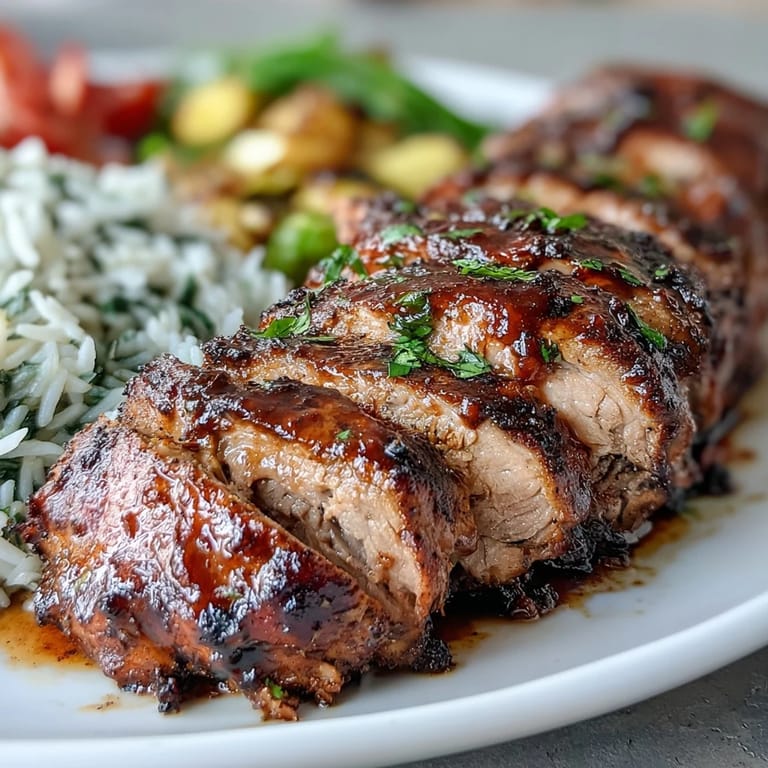
 There's something about the smell of jerk spices hitting a hot oven that stops me mid-conversation every single time. My neighbor Marcus brought over a bottle of his homemade jerk sauce one Saturday, and I was skeptical until that first bite of caramelized pork tenderloin changed everything. The magic isn't in complexity—it's in how allspice, thyme, and a whisper of cinnamon dance together with heat and lime. Now whenever someone asks what to cook for dinner that feels special but doesn't demand hours in the kitchen, this is my answer.
I made this for a dinner party where someone mentioned being tired of the same old chicken recipes, and watching their face when they took that first bite—the way the spices bloomed across their palate—made me feel like I'd discovered something worth sharing. It became the dish people text about later, asking for the recipe because they swear it tastes like they've been to the Caribbean.
Ingredients
- Pork tenderloin, 1 ½ lbs trimmed: This cut is forgiving and cooks fast, which means you won't accidentally dry it out if you're a few minutes over—just don't skip the resting time or you'll lose all those good juices.
- Olive oil, 2 tablespoons: Acts as the base that helps the spices stick and creates that caramelized exterior.
- Soy sauce, 3 tablespoons: Brings umami depth and saltiness; grab the gluten-free version if that matters to you.
- Fresh lime juice, 2 tablespoons: The acid brightens everything and keeps the pork from tasting heavy.
- Brown sugar, 2 tablespoons: Balances the heat and helps with that beautiful browning.
- Green onions, 3 chopped: Their raw, oniony bite survives the marinade and adds texture to the paste.
- Garlic, 2 cloves minced: Use fresh, not powder—it makes a noticeable difference in how the spices meld together.
- Fresh ginger, 1 tablespoon grated: Adds warmth and a subtle bite that plays beautifully with the cinnamon.
- Scotch bonnet pepper, 1 seeded and finely chopped: This is the heat source, and it's seriously hot, so wear gloves and taste as you go; a jalapeño works fine if you prefer gentler spice.
- Ground allspice, 1 teaspoon: The secret weapon—it tastes like clove, cinnamon, and nutmeg had a baby, and it's essential to authentic jerk flavor.
- Dried thyme, 1 teaspoon: Brings an earthy, almost minty note that anchors the whole marinade.
- Ground cinnamon, 1 teaspoon: Not for sweetness—it adds warmth and complexity to savory spice blends.
- Ground nutmeg, ½ teaspoon: A tiny amount goes a long way, adding depth without being obvious about it.
- Kosher salt, 1 teaspoon: Seasons the pork and helps the marinade penetrate the meat.
- Black pepper, ½ teaspoon: Freshly cracked is ideal, but ground works just fine.
Tired of Takeout? 🥡
Get 10 meals you can make faster than delivery arrives. Seriously.
One email. No spam. Unsubscribe anytime.
Instructions
- Blend your spice paste:
- Combine the oil, soy sauce, lime juice, brown sugar, green onions, garlic, ginger, and Scotch bonnet in a blender with the allspice, thyme, cinnamon, nutmeg, salt, and pepper. Pulse until you have a thick, cohesive paste—it should look like wet sand, not a liquid. If it's too thick, add a splash more lime juice.
- Coat the pork:
- Pat the tenderloin completely dry (this matters for better browning), then lay it in a bag or shallow dish and pour the marinade over it, turning to coat every angle. The longer it sits, the deeper the flavor—at least 2 hours, but overnight in the fridge is where the real magic happens.
- Get your oven ready:
- Heat to 425°F and line a baking sheet with foil or parchment for easy cleanup and even heat distribution.
- Roast low and steady:
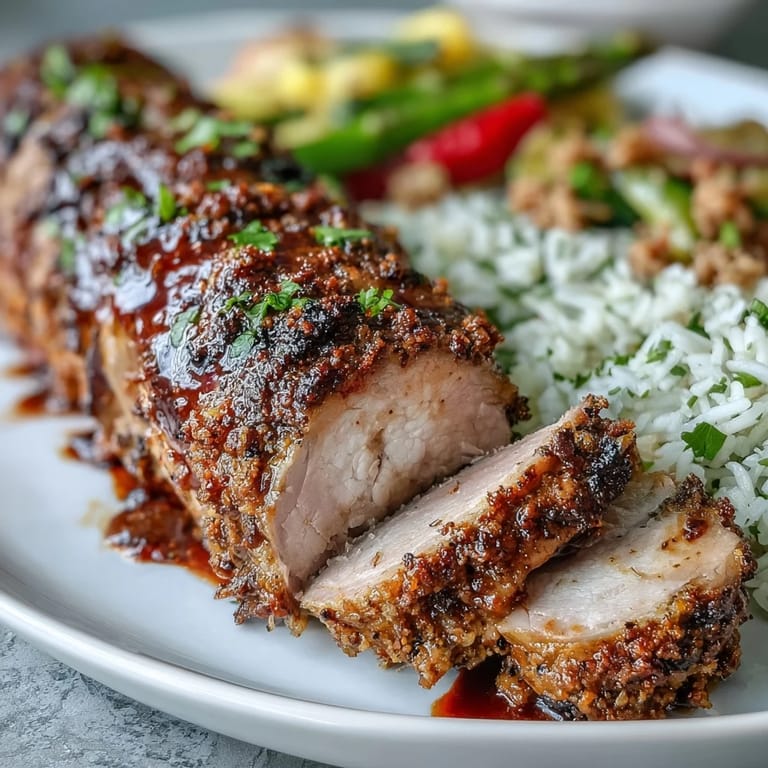
- Place the pork on the sheet, letting excess marinade drip off, and slide it in the oven. Roast for 20–25 minutes, turning it over halfway through, until an instant-read thermometer reads 145°F in the thickest part. You're aiming for slightly pink in the center, which keeps it from being dry.
- Rest and breathe:
- Once it hits temperature, pull it out and loosely tent it with foil for 5–10 minutes—this is when the muscle fibers relax and reabsorb the juices. Skipping this step is the difference between dry pork and sublime pork.
- Slice and serve:
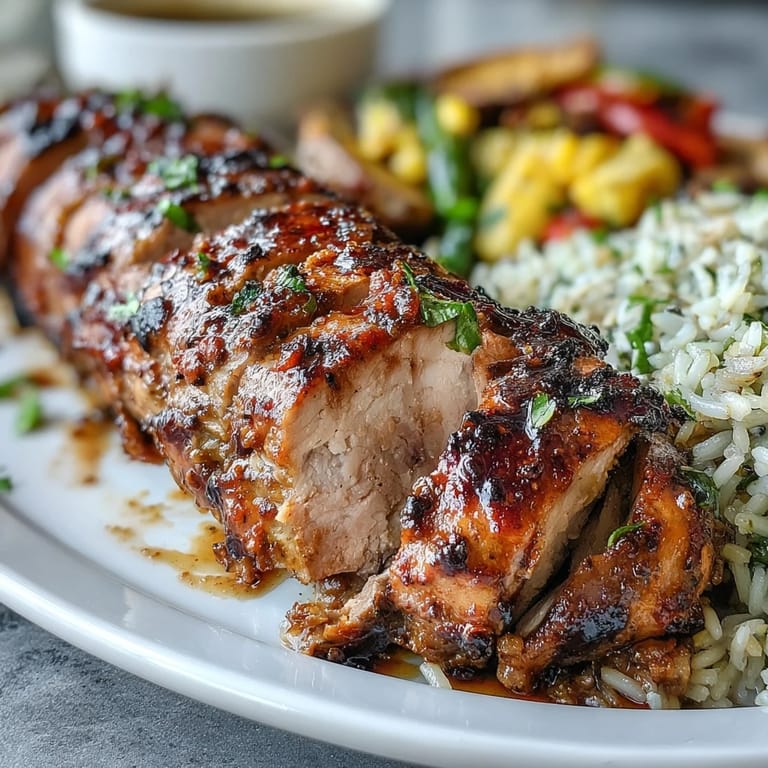
- Cut against the grain into ½-inch slices and serve hot, warm, or even at room temperature with rice and peas, grilled vegetables, or a bright mango salsa.
 Zapisz
 I remember serving this to my cousin who'd been traveling through Jamaica and was homesick for real jerk flavors, and something about nailing those spice proportions well enough to make her eyes light up felt like the highest compliment. That's when I realized this recipe wasn't just about feeding people—it was about honoring a cuisine and doing it right.
Timing Your Marinade
The difference between a decent jerk pork and an unforgettable one often comes down to marinating patience. If you're genuinely short on time, 2 hours will work, but overnight (8–12 hours) lets the spices really infiltrate the meat so every bite tastes intentional. I've learned that marinating in the morning for dinner that night delivers better results than rushing it, and the longer window also means you can be flexible about cooking time.
Heat Management on the Grill
The oven does most of the heavy lifting here, but if you want to channel your inner jerk master, finish the roasted pork on a hot grill for 2–3 minutes per side to add char and smokiness. The marinade will have mostly caramelized by then, so you're not adding much extra time—just a final flourish that makes people think you've been cooking Caribbean food for years. Make sure the grill is screaming hot so you get color without overcooking the interior.
Customizing Heat and Flavor Balance
Jerk is supposed to have personality, which means adjusting the spice level to your crowd isn't cheating—it's smart hosting. Some people remove the Scotch bonnet seeds entirely for warmth without fire, others add two peppers for restaurant-level heat, and there's no wrong answer. One thing I've noticed is that if you dial back the pepper, lean into the allspice and cinnamon a bit more to keep the Caribbean soul intact.
- If heat isn't your thing, use a jalapeño instead of Scotch bonnet and increase the brown sugar by ½ teaspoon for balance.
- For deeper flavor, toast your dried thyme, allspice, cinnamon, and nutmeg in a dry pan for 30 seconds before blending—it wakes them up.
- Pair this with a crisp white wine or cold lager to cut through the richness and let the spices sing.
 Zapisz
 This dish has become my go-to whenever I want to cook something that tastes like a labor of love but actually respects my time. Once you nail it once, you'll find yourself making it again and again.
Najczęściej zadawane pytania dotyczące przepisów
- → Jak długo należy marynować szynkę?
Minimum 2 godziny w lodówce, jednak najlepiej zostawić overnight. Dłuższe marynowanie pozwala przyprawom głębiej wniknąć w mięso i zwiększa intensywność smaków.
- → Czy mogę zastąpić ostrą paprykę Scotch bonnet?
Tak, możesz użyć jalapeño dla łagodniejszej wersji. Pamiętaj o rękawiczkach podczas krojenia gorących papryk i usuń nasiona jeśli wolisz mniej ostre danie.
- → Jakie dodatki najlepiej pasują do szynki jerk?
Tradycyjnie podaje się z ryżem i fasolką, grillowanymi warzywami lub świeżą mango salsa. Świetnie komponuje się też z kokosowymi ryżami czy pieczonymi batatami.
- → Czy mogę zrobić to danie bezglutenowe?
Tak, wystarczy użyć certyfikowanego sosu sojowego bezglutenowego lub tamari zamiast zwykłego sosu sojowego. Reszta składników jest naturalnie bezglutenowa.
- → Jak sprawdzić czy szynka jest dobrze upieczona?
Użyj termometru mięsnego - wewnętrzna temperatura powinna wynosić 63°C. Po wyjęciu z pieca pozwól mięsu odpocząć przez 5-10 minut pod folią przed krojeniem.
- → Czy mogę dodać dodatkowy grill?
Absolutnie! Po upieczeniu w piecu możesz dokończyć na gorącym grillu przez 2-3 minuty z każdej strony dla dodatkowego wędzonego smaku i chrupiącej skórki.