 Zapisz
 Chipotle's burrito bowl changed something for me—not just my lunch habits, but how I thought about weeknight meals. I'd order the same thing so many times that the staff knew my order by heart, and one day I decided to recreate that magic at home. The first attempt was chaotic: carnitas scattered across the stovetop, rice mushy, queso broken. But after a few tries, I understood the rhythm, the layering, the way each component had to shine on its own before coming together. Now when I make this bowl, I'm not copying a restaurant—I'm building something that tastes like my own kitchen.
I made this for my sister when she came home from a brutal week at work, and watching her eat it quietly, eyes closed for a moment, made me realize how much comfort lives in a bowl of good food. She didn't need conversation—she needed flavor and care, and somehow this hit both notes. Now whenever she visits, she texts me asking if I'm making the burrito bowls, and I always do.
Ingredients
- Pork shoulder, 2 lbs: This cut transforms into something impossibly tender after slow cooking, and the fat is what makes carnitas actually taste like carnitas.
- Olive oil: Use a regular one, not your fancy stuff—it just needs to do the job of browning without burning.
- Cumin, oregano, smoked paprika: This trio is the whole backbone of the flavor profile; don't skip any of them or the pork tastes generic.
- Orange and lime juice: The citrus is what keeps the pork from tasting heavy, and it cuts through the richness perfectly.
- Chicken broth: This keeps everything moist and adds depth without overwhelming the other flavors.
- Long grain white rice, 1.5 cups: The cilantro lime rice needs to stay fluffy and separate, not mushy, so the grain matters here.
- Fresh cilantro: Get more than you think you need—I always use it in three different components and it somehow never feels like too much.
- Black beans: Canned is totally fine; the spices you add to them make them taste anything but lazy.
- Monterey Jack and cheddar cheese: Monterey Jack melts like butter and cheddar brings sharpness; together they're unstoppable.
- Whole milk: Don't use cream or evaporated milk; this is where the queso stays silky and pourable.
- Cornstarch: This prevents the cheese from breaking when it cools, and it's the difference between queso and scrambled cheese.
- Ripe avocados: They should yield slightly to pressure, not feel like rocks; underripe ones will taste bitter and waxy.
- Sour cream: It's tangy and cooling, and it sits on top like a cloud that brings everything together.
Tired of Takeout? 🥡
Get 10 meals you can make faster than delivery arrives. Seriously.
One email. No spam. Unsubscribe anytime.
Instructions
- Season and brown the pork:
- Pat the pork dry first—this matters for browning. Toss it with salt, pepper, cumin, oregano, and paprika, then let it sit for a minute so the spices stick. When you heat the oil until it shimmers and add the pork, don't move it around; let it develop a dark crust, about 3-4 minutes per side, which is where all the flavor comes from.
- Add the liquid and simmer:
- Once the pork is browned on all sides, add minced garlic and quartered onion, then pour in orange juice, lime juice, and broth. The kitchen will smell incredible—that's your sign you're on the right track. Cover the pot and turn the heat to low, letting it bubble gently for 2 hours until the meat falls apart when you poke it with a fork.
- Shred and finish the carnitas:
- Pull the pork out with tongs and shred it on a cutting board, letting the onion and garlic stay behind in the liquid. Return the shredded pork to the pot and let it simmer uncovered for 10 minutes, which thickens the liquid into a light sauce that coats each strand. Taste it and adjust salt if needed.
- Cook the cilantro lime rice:
- Rinse the rice until the water runs clear—this removes excess starch and prevents gumminess. In a saucepan, combine rice, water, olive oil, and salt, bring to a boil, then immediately drop the heat to low, cover, and cook without peeking for 18 minutes. When the timer goes off, remove it from heat and let it sit, covered, for 5 minutes; this is when the rice finishes cooking from residual heat. Fluff it with a fork, then stir in fresh cilantro and lime juice while it's still warm so the flavors soak in.
- Warm the beans:
- This is the easiest step, but don't skip seasoning it properly. Combine drained black beans with cumin, garlic powder, salt, and pepper in a small saucepan, add just a splash of water, and heat over medium until they're warm all the way through, which should take about 5 minutes.
- Make the queso:
- Melt butter over medium heat, stir in cornstarch, and cook it for exactly one minute—this cooks out the raw starch taste. Pour in milk slowly while whisking constantly so you don't get lumps, then keep whisking until the sauce thickens slightly, about 2 minutes. Add the shredded cheeses and minced jalapeño if using, and stir until smooth and pourable; if it gets too thick, add a splash more milk. Keep it warm on low heat but don't let it sit too long or it'll separate.
- Prepare fresh salsa and guacamole:
- Dice tomatoes and red onion, seed and dice a jalapeño, chop cilantro, and combine everything with lime juice and a pinch of salt. For guacamole, cut avocados in half lengthwise, remove the pit, and scoop into a bowl, then mash it to whatever texture you prefer—I like mine with some chunks still visible. Stir in the same onion and tomato mixture, lime juice, cilantro, salt, and pepper, and do this right before serving so it doesn't oxidize and turn brown.
- Assemble the bowls:
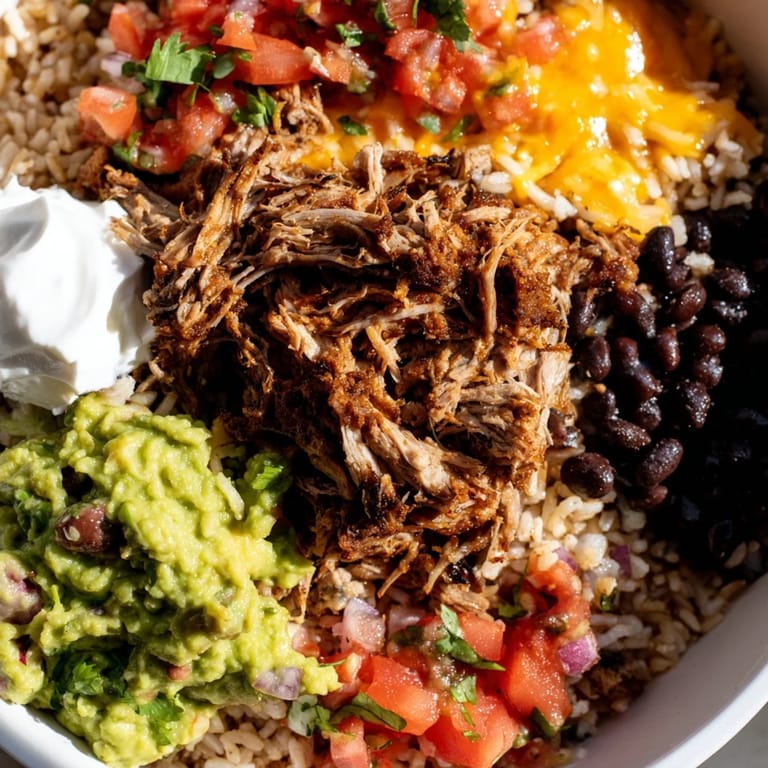
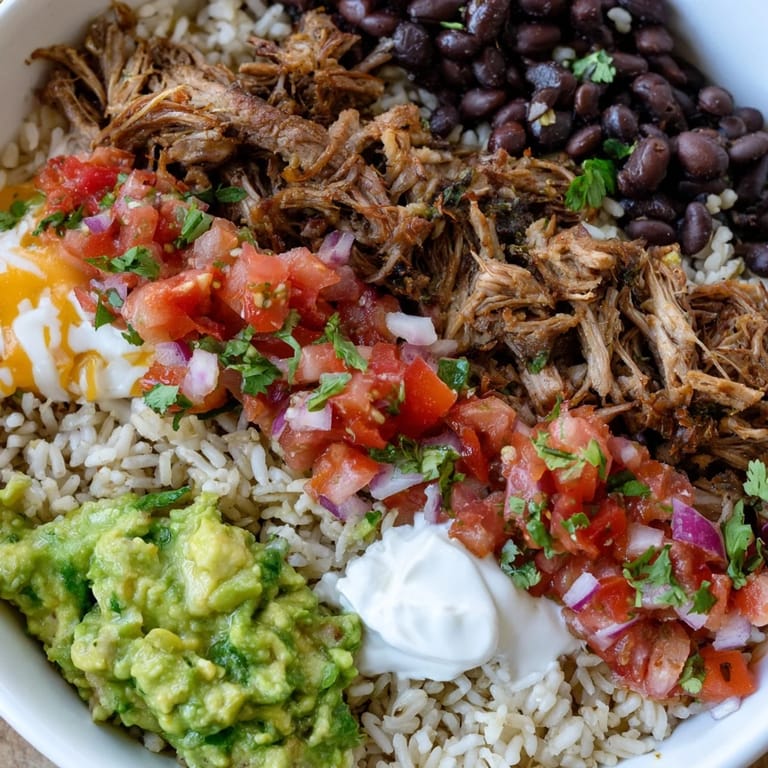
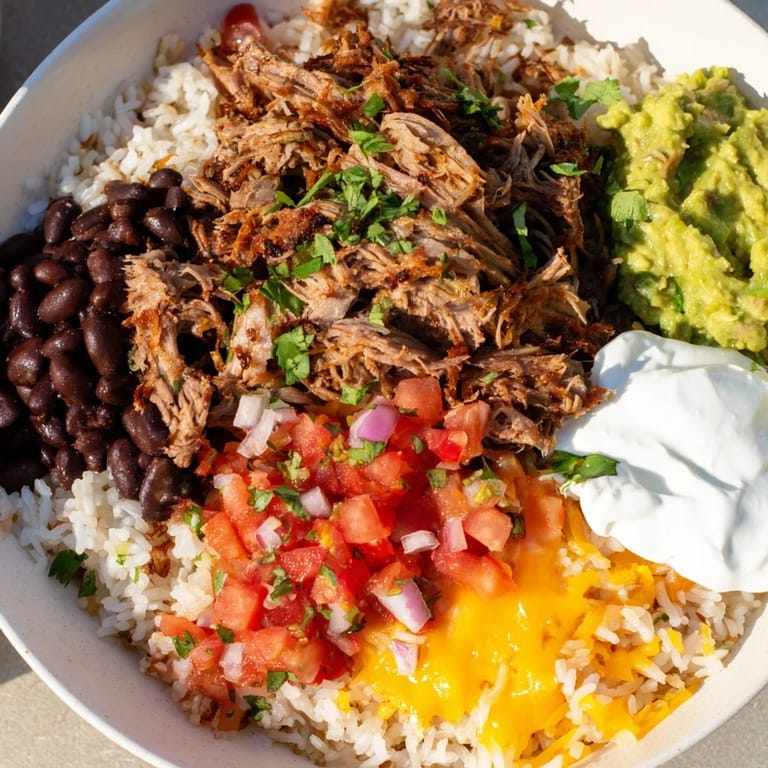
- This is where everything comes together. Start with a bed of cilantro lime rice, add a scoop of warm beans, then a generous handful of carnitas with a little of that cooking liquid, pour queso over the top, dollop fresh salsa, a spoonful of sour cream, and finish with guacamole. The order matters because the warmth of the rice and beans will help soften the guacamole slightly without making it mushy.
 Zapisz
 There's something about layering everything into a bowl that feels ceremonial, like you're building something meaningful instead of just eating lunch. My partner actually asked me to make these for his birthday dinner with friends, and I realized this isn't just a copycat recipe anymore—it's become a dish people ask for by name.
Make-Ahead Magic
The carnitas can live in the fridge for up to 4 days, and honestly they taste even better the next day once all the flavors have settled into the meat. The rice is fine for 3 days too, though it'll be firmer than fresh. I often prep the carnitas and rice on a Sunday, and then assembly on a weeknight takes literally 10 minutes. Even the queso can be made ahead and gently reheated in a saucepan with a splash of milk, though it's best made fresh if you have the time. The salsa and guacamole are the only things that truly need to happen close to eating, and that's where you want the freshness anyway.
Customizing Your Bowl
This recipe is a blueprint, not a prison sentence. Swap black beans for pinto beans if you prefer them, or use both. Add shredded lettuce if you want crunch, or corn for sweetness. Some people crisp the carnitas under the broiler for 3 minutes to bring back that textural contrast. I've added pickled jalapeños, roasted corn, even crispy tortilla strips when I wanted to get fancy. The base of rice, beans, and pork holds everything together, so everything else is just playing around and finding what makes your bowl feel right.
Pairing and Serving
These bowls sing with a crisp Mexican lager, or if you're not drinking alcohol, a lime-infused sparkling water works beautifully. The acidity and carbonation cut through the richness of the cheese and sour cream and keep your palate feeling fresh between bites. I also find that making extra carnitas and queso means people can build a second bowl if they want, or use the leftovers in tacos the next day. There's something generous about having enough to go around without anyone feeling deprived.
- Brown the pork properly at the beginning for depth and flavor.
- Assemble the bowls right before serving while everything is at the right temperature.
- Make guacamole and salsa as close to serving time as possible for freshness.
 Zapisz
 Making this bowl at home taught me that you don't have to chase restaurant food when you understand why each element works. This is food that tastes like care, and somehow that matters more than where it comes from.
Najczęściej zadawane pytania dotyczące przepisów
- → Jak osiągnąć soczyste carnitas?
Wolne duszenie mięsa z przyprawami i sokiem z cytrusów pozwala uzyskać miękkie i soczyste carnitas, które łatwo się rwie na kawałki.
- → Jak przygotować ryż z limonką i kolendrą?
Ugotuj ryż do miękkości, a następnie wymieszaj z sokiem z limonki i świeżą, drobno posiekaną kolendrą dla świeżości i aromatu.
- → Czy warto dodać jalapeño do queso?
Jalapeño dodaje queso delikatnej ostrości i wyraźnego charakteru, ale można go pominąć, by złagodzić smak.
- → Jak urozmaicić czarną fasolę w daniu?
Przypraw fasolę kminem rzymskim i czosnkiem w proszku, a przed podaniem można ją lekko podsmażyć dla głębszego smaku.
- → Jak najlepiej podać guacamole w misce?
Guacamole powinno być świeże i kremowe, przygotowane tuż przed podaniem, aby zachować intensywny smak awokado i cytrusów.